What the ranking is built on
1. A published CE EN 13594 rating, where one exists
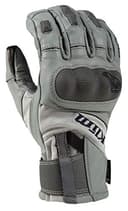
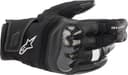
Two of the six publish one, and they are ranked first and second for that reason. The KLIM Adventure GTX Short publishes CE EN 13594:2015, KP Level 1 — KP meaning the knuckle protector was tested as part of the certification. The Alpinestars SMX-Z Drystar publishes CE EN 13594:2015 Level 1 KP as well, at a fraction of the KLIM, and that makes it the best-value certified glove on this site by a distance — which is exactly why our head-to-head between those two gloves exists.
Every rating in this category that we have found is Level 1. We track no Level 2 glove at all, at any price, in either cut. If a listing claims “CE Level 1 armor” without naming EN 13594, that language has usually been borrowed from EN 1621 — the armor standard for elbows, knees and backs — where it does not belong on a glove.
2. The palm and the heel, which is where the hand lands
Hands do not land on knuckles. They land on the palm and the heel of the hand, which is why the material there outranks everything on the back of the glove. The KLIM uses goat leather and a stretch woven shell with a PORON XRD palm and 3D silicone finger pads. The SMX-Z Drystar uses full-grain goat leather at the palm and impact zones with suede side-hand reinforcement. The SMX-2 Air is leather and textile. The two cheapest picks here — the CoolPro and the Kemimoto — are mesh and textile with palm padding rather than leather, and their cards say outright that mesh trades abrasion coverage for airflow.
3. Knuckle hardware, with the correction that matters
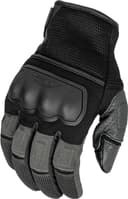
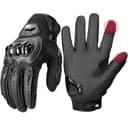
Five of these publish a hard knuckle: the KLIM a carbon-fiber protector, the SMX-2 Air a carbon-fiber knuckle, the SMX-Z Drystar a nylon hard knuckle, and the CoolPro and Kemimoto hard knuckle armor. That is a better hit rate than any other spec on this page — and it is the specification worth caring about least. A hard knuckle is visible, cheap to add and unlikely to be what saves your hand. Buy on palm, heel and closure; treat the knuckle as a bonus.
4. Venting, and the fact that a short cuff is the hot-weather answer
This is the cut’s genuine advantage rather than its consolation prize. The Fly Racing CoolPro is a mesh back built for airflow first. The SMX-2 Air is a vented sport glove light enough to wear when it is genuinely hot. The KLIM Adventure GTX Short publishes no insulation at all, which makes it a wet-but-not-cold glove rather than a winter one. If your riding is summer commuting or track days, a gauntlet is not the safer choice, it is the choice you stop wearing — and a glove in the top box protects nothing. Our summer glove ranking works the heat problem specifically.
5. A named membrane, or a word
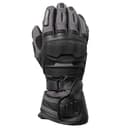
Three of the six make a waterproofing claim and they are not equal. KLIM publishes GORE-TEX with GORE Grip Technology, laminated so the membrane does not shift inside a soaked glove. Alpinestars publishes a named Drystar membrane for the SMX-Z. The Tourmaster Super-Tour publishes a named Aqua-barrier membrane, which is why it is here rather than a cheaper unnamed alternative: a named membrane is a claim somebody can be held to, and “waterproof” on its own is not.
Which one, in a sentence each
Wet adventure and touring days, jacket with a tight storm cuff. The KLIM Adventure GTX Short — same GORE-TEX and same published certification as KLIM’s flagship gauntlet, less money, and no insulation to cook you in July. In real cold it needs a liner, which its card states.
One glove for most of the year, on a sane budget. The Alpinestars SMX-Z Drystar. It is the cheapest glove we found that publishes both halves of the job — a CE rating and a named waterproof membrane — and Alpinestars’ own dearer adventure glove cannot match it on paper. Gloves under $100 names it in its first paragraph as the glove worth stretching for, because it sits just over that line.
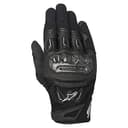
Hot-weather sport riding. The SMX-2 Air Carbon V2 — vented construction, a carbon knuckle, and a snug sport fit. The short cuff is easy on and off at stops, which matters more on a summer commute than any spec above it.
The hottest days, or the lowest budget. The CoolPro for airflow, the Kemimoto for price. Both publish knuckle armor and a touchscreen fingertip, and both have limited abrasion coverage by construction. Our budget glove ranking is explicit about the three tiers down here and tells you not to treat the cheapest as your main pair.
What this page is not
It is not the cold-weather page. Every glove here is uninsulated or lightly so by design, and a short cuff lets wind at the wrist. Winter gloves and heated gloves are the right pages when the temperature is the problem, and heated gear explained covers the 12V-versus-battery question before you spend anything.
It is also not the full category. Our best motorcycle gloves ranking spans every cut and budget, the leather page concentrates on the material that resists abrasion best, and the adventure-touring page ranks every waterproof glove we track regardless of cuff length. If you ride with a passenger or in a group, the thing most worth your next hundred dollars is probably not a glove at all — armor under $200 makes that case with the registry counts behind it. And size the glove before you buy it: how to choose motorcycle gloves covers the measurement, and a glove that slides on the hand protects neither the palm nor the knuckle.