Apex & Armor

Best Gauntlet Motorcycle Gloves

A gauntlet is the only glove that covers the joint everything else leaves bare. One of the six here publishes a CE rating — and the cuff length is the reason to buy any of them.

By Stephen V.Last updated How we research

The best gauntlet motorcycle glove is the KLIM Badlands GTX Long — for the rider whose day starts at 40 degrees in the rain and does not improve, because it is the only gauntlet we track that publishes CE EN 13594 Level 1 KP alongside GORE-TEX with GORE Grip and 60 g of Thinsulate on the backhand only. If you want a leather gauntlet that seals out winter wind without the flagship price, the Milwaukee Leather Gauntlet Winter glove is the budget pick at roughly a sixth of the KLIM — with its missing hard knuckle stated on its own card rather than glossed over.

A gauntlet is defined by one thing and it is not warmth. The long cuff extends past the wrist and closes over the jacket sleeve (or, on a short-cuff glove, tucks under it), which does two jobs no other glove feature does: it covers the wrist joint, and it stops the glove being pulled off the hand in a slide. Our gauntlet versus short-cuff guide resolves that decision in the abstract. This page is the ranking that follows if you have decided the answer is a gauntlet.

And here is the finding that should set your expectations, because it is a count from our own registry of 24 gloves rather than an opinion. Four of those twenty-four publish a CE EN 13594 rating, every one of them is Level 1, and only one of the four is a long gauntlet. There is no US legal standard for motorcycle gloves at all — unlike helmets, where DOT FMVSS 218 is mandatory — so certification here is a test a maker chose to pay for, and most do not. That does not make the uncertified gloves junk; EN 13594 testing costs money per model and the small brands skip it. It does mean you cannot shop this category on certification, so this page ranks on the four things that are published: cuff length and closure, the material where the hand lands, knuckle hardware, and whether the maker names a membrane or just says “waterproof”. Our glove CE ratings guide is the pillar under all of it.

Nothing here was worn or crash-tested by us: we own no units and run no lab, and our methodology page says what we do instead. Every price is live and date-stamped on its own button.

How this is funded: we earn a commission if you buy through our links, at no extra cost to you. It never changes which gear we recommend, and we’ll tell you plainly when to skip a pick. Full disclosure.

Quick picks

Ranked on certification, spec and buyer fit. Select a row to jump to the full write-up. We haven’t crash-tested this gear — here is exactly what we do instead.

#GearBest forPrice
1
KLIM Badlands GTX Long Glove

KLIM Badlands GTX Long Glove

CE EN 13594 Level 1 KP

The one glove here built for the day that starts at 40 degrees in the rain and does not improve. GORE-TEX with GORE Grip Technology, 60 grams of 3M Thinsulate on the backhand only, a polycarbonate knuckle guard over XRD foam, and a published CE Level 1 KP rating certified to EN 13594. KLIM puts the certification in the product name; almost nobody else does.

Best overall gauntlet
$249.99 · View on Amazon

Price as of November 24, 2026. #ad How we’re funded

2
Alpinestars SP-8 V3

Alpinestars SP-8 V3

The best all-around leather gauntlet here: a full-gauntlet cuff, a hard knuckle, and CE certification, with enough airflow to run three seasons. The default do-everything sport-touring glove.

Best three-season leather gauntlet
$112.46 · View on Amazon

$124.9510% off

Price as of November 24, 2026. #ad How we’re funded

3
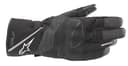
Alpinestars Andes V3 Drystar Glove

Alpinestars Andes V3 Drystar Glove

The only glove here whose maker publishes actual waterproofing numbers — Alpinestars states 5000 mm of waterproof protection and 5000 g per square meter of breathability for the Drystar membrane — on a goat leather and textile shell with viscoelastic knuckle armor, reflective panels and touchscreen fingertips. The catch is what is missing: Alpinestars publishes no CE EN 13594 rating for it at all, while publishing one for its own cheaper SMX-Z Drystar.

Most membrane data published
$169.95 · View on Amazon

Price as of November 24, 2026. #ad How we’re funded

4
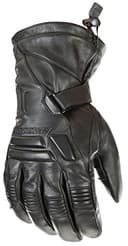
Joe Rocket Windchill Leather Winter

Joe Rocket Windchill Leather Winter

A leather winter glove that trades some warmth for real abrasion resistance and a hard knuckle. The pick for riders who won't give up leather protection when it gets cold.

Best leather winter gauntlet
$88.99 · View on Amazon

Price as of November 24, 2026. #ad How we’re funded

5
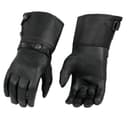
Milwaukee Leather Gauntlet Winter Gloves

Milwaukee Leather Gauntlet Winter Gloves

A leather gauntlet winter glove with a long insulated cuff at a value price — the cruiser-friendly cold-weather option that seals out wind at the wrist.

Budget pick — cheapest leather gauntlet
$34.00 · View on Amazon

$40.0015% off

Price as of November 24, 2026. #ad How we’re funded

6
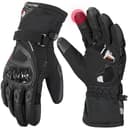
Kemimoto Winter Waterproof Gloves

Kemimoto Winter Waterproof Gloves

A cheap, warm, waterproof winter glove with knuckle protection and a long cuff. It's the budget answer to cold hands, and for the money it does the job.

Cheapest warm and waterproof
$27.99 · View on Amazon

$37.9926% off

Price as of November 24, 2026. #ad How we’re funded

The picks in full

#1Best overall gauntletCE EN 13594 Level 1 KP

KLIM Badlands GTX Long Glove

The one glove here built for the day that starts at 40 degrees in the rain and does not improve. GORE-TEX with GORE Grip Technology, 60 grams of 3M Thinsulate on the backhand only, a polycarbonate knuckle guard over XRD foam, and a published CE Level 1 KP rating certified to EN 13594. KLIM puts the certification in the product name; almost nobody else does.

Strengths

  • CE Level 1 KP rating certified to EN 13594, published by KLIM on the product page itself
  • GORE-TEX + GORE Grip Technology, with the membrane laminated so it does not shift inside a soaked glove
  • 60 g 3M Thinsulate on the backhand only, which keeps the palm thin enough to still feel the levers

Trade-offs

  • By far the most expensive glove on this page, and the gap is not small
  • Insulated, so it is genuinely too warm for summer touring — a second pair rather than the only pair
  • The long gauntlet has to go over a jacket cuff, which some adventure jackets are not cut for
Safety standardCE EN 13594 Level 1 KP
ConstructionGoat leather with GORE-TEX + GORE Grip, polycarbonate knuckle guard over XRD foam
Key featureGORE-TEX + 60 g Thinsulate, CE Level 1 KP
Fit / sizingSM-3X; long gauntlet worn over the jacket cuff; MULT-E-TOUCH touchscreen
Best forCold, wet, long-distance adventure and touring days where staying dry decides whether you keep going

Specs and certification read from the manufacturer and retailer listing, on September 10, 2026. “Check current listing” means the maker doesn’t publish that figure — we won’t guess it.

#2Best three-season leather gauntlet

Alpinestars SP-8 V3

The best all-around leather gauntlet here: a full-gauntlet cuff, a hard knuckle, and CE certification, with enough airflow to run three seasons. The default do-everything sport-touring glove.

Strengths

  • CE-certified full-grain leather with a hard knuckle protector
  • Full-gauntlet cuff seals under a jacket sleeve
  • Touchscreen fingertip and a secure dual closure

Trade-offs

  • Gauntlet cut is warm at the height of summer
  • Stiff out of the box — needs a break-in period
Safety standardCheck current listing
ConstructionFull-grain leather, hard knuckle
Key featureCE-certified gauntlet, hard knuckle
Fit / sizingTrue to size; snug when new
Best forRiders who want one CE gauntlet glove for most of the year

Specs and certification read from the manufacturer and retailer listing, on July 21, 2026. “Check current listing” means the maker doesn’t publish that figure — we won’t guess it.

#3Most membrane data published

Alpinestars Andes V3 Drystar Glove

The only glove here whose maker publishes actual waterproofing numbers — Alpinestars states 5000 mm of waterproof protection and 5000 g per square meter of breathability for the Drystar membrane — on a goat leather and textile shell with viscoelastic knuckle armor, reflective panels and touchscreen fingertips. The catch is what is missing: Alpinestars publishes no CE EN 13594 rating for it at all, while publishing one for its own cheaper SMX-Z Drystar.

Strengths

  • Alpinestars publishes real membrane numbers: 5000 mm waterproof, 5000 g per square meter breathability
  • Goat leather and textile construction with viscoelastic knuckle armor and reflective panels
  • Touchscreen-compatible fingertips, which matters more on a GPS-equipped touring bike than it sounds

Trade-offs

  • No CE EN 13594 rating published by Alpinestars for this model — its cheaper SMX-Z Drystar does publish one
  • Viscoelastic knuckle armor rather than a hard shell, so less to skate on in a slide
  • Costs meaningfully more than the certified SMX-Z Drystar for a glove with less published safety data
Safety standardCheck current listing
ConstructionGoat leather and textile with Drystar membrane, viscoelastic knuckle armor
Key featureDrystar 5000 mm / 5000 g per square meter (maker-published)
Fit / sizingS-3XL; touchscreen fingertips; reflective panels
Best forTouring riders who want published membrane figures and reflective panels, and who accept an uncertified glove

Specs and certification read from the manufacturer and retailer listing, on September 10, 2026. “Check current listing” means the maker doesn’t publish that figure — we won’t guess it.

#4Best leather winter gauntlet

Joe Rocket Windchill Leather Winter

A leather winter glove that trades some warmth for real abrasion resistance and a hard knuckle. The pick for riders who won't give up leather protection when it gets cold.

Strengths

  • Leather construction with a hard knuckle
  • Insulated and wind-resistant
  • Gauntlet cuff seals out cold air

Trade-offs

  • Not as warm as a bulky textile winter glove
  • Leather needs care to stay waterproof
Safety standardCheck current listing
ConstructionLeather, insulated, hard knuckle
Key featureLeather winter gauntlet, hard knuckle
Fit / sizingTrue to size
Best forCold-weather riders who still want leather protection

Specs and certification read from the manufacturer and retailer listing, on July 21, 2026. “Check current listing” means the maker doesn’t publish that figure — we won’t guess it.

#5Budget pick — cheapest leather gauntlet

Milwaukee Leather Gauntlet Winter Gloves

A leather gauntlet winter glove with a long insulated cuff at a value price — the cruiser-friendly cold-weather option that seals out wind at the wrist.

Strengths

  • Leather with a long, sealing gauntlet cuff
  • Insulated for cold-weather riding
  • Value price

Trade-offs

  • No hard-shell knuckle armor
  • Basic waterproofing
Safety standardCheck current listing
ConstructionLeather, insulated gauntlet
Key featureLeather winter gauntlet
Fit / sizingRuns true
Best forCruiser riders who want a leather winter gauntlet cheaply

Specs and certification read from the manufacturer and retailer listing, on July 21, 2026. “Check current listing” means the maker doesn’t publish that figure — we won’t guess it.

#6Cheapest warm and waterproof

Kemimoto Winter Waterproof Gloves

A cheap, warm, waterproof winter glove with knuckle protection and a long cuff. It's the budget answer to cold hands, and for the money it does the job.

Strengths

  • Waterproof and thermally insulated
  • Long cuff and knuckle protection
  • Very low price

Trade-offs

  • Bulky; reduces feel at the controls
  • Budget construction and closures
Safety standardCheck current listing
ConstructionWaterproof textile, insulated
Key featureWaterproof, insulated, long cuff
Fit / sizingRuns true; size up for liners
Best forThe lowest-cost warm winter glove

Specs and certification read from the manufacturer and retailer listing, on July 21, 2026. “Check current listing” means the maker doesn’t publish that figure — we won’t guess it.

What the ranking is built on

1. The cuff, which is the entire reason this category exists

Every glove on this page has a long cuff, so the question becomes how it closes and what it closes over. The Badlands GTX Long is cut to be worn over the jacket cuff, which is the correct configuration in rain — water running down the sleeve goes outside the glove rather than into it — and KLIM says plainly that some adventure jackets are not cut wide enough to allow it. That is a fitment constraint worth checking before you spend flagship money.

The leather gauntlets here — the SP-8 V3, the Joe Rocket Windchill and the Milwaukee — use a dual or cinch closure at the forearm, which is what actually keeps the glove on the hand. A gauntlet with a slack cuff is a short-cuff glove with extra fabric. If you try one thing in a shop, try pulling the fastened glove off by the fingertips with your other hand.

2. Material where the hand lands

Palms and heels take the first contact, and leather is still the material that resists abrasion best per millimeter. Four of the six here are leather or leather-dominant: the Badlands uses goat leather with GORE Grip, the SP-8 V3 is full-grain leather, and the Windchill and Milwaukee are insulated leather. The two textile picks are the Andes V3 Drystar (goat leather and textile) and the Kemimoto, which is waterproof textile throughout. That ordering is deliberate rather than snobbery, and our leather glove ranking covers the material argument in full.

3. Knuckle hardware, with an honest correction

Four of these publish a hard knuckle: the Badlands a polycarbonate guard over XRD foam, the SP-8 V3 and the Windchill hard knuckles, the Kemimoto knuckle protection. The Andes V3 Drystar uses viscoelastic knuckle armor rather than a hard shell, and the Milwaukee publishes no hard-shell knuckle at all — which is on its card and is the main thing you give up to get a leather gauntlet this cheap.

The honest correction, because it gets this category wrong more than anything else: the knuckle is the most visible protection on a glove and the least likely to save your hand. Hands land on palms and heels, not on the backs of the fingers. A hard knuckle is worth having and it is not the specification to choose a glove on. Palm and heel reinforcement is.

4. A named membrane, or a word

This is where the spec sheets separate. KLIM publishes GORE-TEX with GORE Grip Technology — a laminated membrane that does not shift inside a soaked glove. Alpinestars publishes actual numbers for the Andes V3 Drystar: 5000 mm of waterproofing and 5000 g per square meter of breathability, which is more membrane data than anyone else in our registry provides for a glove. The Windchill is wind-resistant rather than waterproof and Joe Rocket says so. The Kemimoto and the Milwaukee publish the word “waterproof” with nothing behind it, and their cards say that too. A named membrane is a claim somebody can be held to; the word is not.

The one that is most expensive is not the one with the most safety data

This is the most useful thing on the page and it is worth a section of its own. The Alpinestars Andes V3 Drystar costs meaningfully more than Alpinestars’ own SMX-Z Drystar, and the cheaper glove is the one that publishes a CE rating. The SMX-Z Drystar publishes CE EN 13594:2015 Level 1 KP with a named Drystar membrane and full-grain goat leather at the palm and impact zones; the dearer Andes V3 publishes membrane numbers, reflective panels and no EN 13594 rating at all.

We have still ranked the Andes V3 here, for a specific reason: it is a gauntlet and the SMX-Z Drystar is a short-cuff glove, so on this page they are not substitutes. But if the cuff is negotiable and the certification is not, the honest routing is away from this page and onto our short-cuff ranking, where the SMX-Z Drystar sits and where the certified gloves are concentrated. Buyer first, page second — the KLIM Adventure GTX against the SMX-Z Drystar is that same decision at two prices.

Warmth and waterproofing are two different purchases

Riders conflate these constantly and the spec sheets do not. The Badlands is insulated (60 g Thinsulate, backhand only, which is why the palm stays thin enough to feel the levers) and waterproof. KLIM’s own Adventure GTX Short is waterproof with no insulation at all. The Windchill is leather and insulated but not waterproof. The Kemimoto is waterproof and insulated and bulky enough to reduce feel at the controls, which its card says.

Work out which problem you have. If your hands are cold and dry, you want insulation or heated gloves — which is the one category where the cold problem is actually solved rather than mitigated, and heated gear explained covers the 12V-versus-battery decision. If your hands are wet, you want a named membrane and a cuff worn over the sleeve. If they are both, you want the glove at the top of this page, and you will pay for it. Our winter glove ranking works the cold problem specifically, including the cheaper textile route.

What this page is not

It is not a summer page. A gauntlet cuff is warm by design — the SP-8 V3 is the only glove here with enough airflow to run three seasons, and its card says the cut is warm at the height of summer. If it is hot where you ride, the summer glove ranking and the short-cuff ranking are the right pages, and a short cuff is not a compromise in July, it is the correct tool.

It is also not the whole category. Our best motorcycle gloves ranking spans every cut and budget, the adventure-touring page concentrates the waterproof gloves regardless of cuff, and gloves under $100 is the page that states the hardest fact in this category outright: not one glove we track under a hundred dollars publishes a CE rating at all. Whatever you buy, size it properly first — how to choose motorcycle gloves covers the measurement, and a glove that slides on the hand protects neither the palm nor the knuckle.
Frequently asked questions

Are gauntlet gloves safer than short-cuff gloves?

They cover more, which is not the same sentence. A long cuff covers the wrist joint and makes the glove much harder to pull off the hand in a slide — both real advantages. But coverage is not certification: of the four gloves in our registry that publish a CE EN 13594 rating, only one is a long gauntlet. A certified short-cuff glove with a good palm can out-specify an uncertified gauntlet. Decide the cuff on how and when you ride, then rank within that choice.

Do gauntlet gloves go over or under the jacket sleeve?

Over, in almost every case, and that is the point of the design — rain running down the sleeve goes outside the glove rather than into it. KLIM is explicit that the Badlands GTX Long is worn over the jacket cuff, and equally explicit that some adventure jackets are not cut wide enough to allow it. Check your own jacket cuff before buying a long gauntlet. Short-cuff gloves are designed the opposite way, to tuck under a storm cuff.

Which gauntlet gloves are CE certified?

In our registry, one: the KLIM Badlands GTX Long, which publishes CE EN 13594 Level 1 KP — KLIM puts the certification in the product name. Four of our twenty-four gloves publish an EN 13594 rating at all, every one is Level 1, and the other three are short-cuff designs. There is no US legal standard for motorcycle gloves, so certification here is voluntary and most makers skip it.

Are gauntlet gloves too hot for summer?

Generally yes, by design — a long cuff seals the wrist, which is exactly what you do not want in July. The Alpinestars SP-8 V3 is the one here with enough airflow to run three seasons, and even its own spec note says the cut is warm at the height of summer. For hot weather, a vented short-cuff glove is the right tool rather than a compromise.

Is a waterproof glove a warm glove?

No, and the spec sheets are clear even where the marketing is not. KLIM's Adventure GTX Short is GORE-TEX with no insulation at all; the Badlands GTX Long adds 60 g of Thinsulate on the backhand only. The Joe Rocket Windchill is insulated leather but wind-resistant rather than waterproof. Work out whether your hands are cold, wet or both before you shop, because the three answers are three different gloves.

Sources

  • KLIM — Badlands GTX Long Glove (CE Certified) — KLIM's published Badlands GTX Long specs: "CE Level 1 KP rating certified to EN 13594", "GORE-TEX + GORE Grip Technology" with the "GUARANTEED TO KEEP YOU DRY" promise, "Goat leather construction", "60 Grams 3M Thinsulate insulation on backhand", "Polycarbonate knuckle guard with XRD Impact Protection Foam", ceramic print in the knuckle, palm pad and gauntlet cuff pad, MULT-E-TOUCH screen functionality, sizes SM-3X. KLIM carries the certification in the product name itself (accessed September 10, 2026)
  • KLIM — Adventure GTX Short Glove — KLIM's published Adventure GTX Short specs: "CE CERTIFIED TO EN13594:2015, KP LEVEL 1", "GORE-TEX + GORE GRIP", "GOAT LEATHER/STRETCH WOVEN CONSTRUCTION", "SHORT DESIGN FOR UNDER-CUFF USE", "CARBON FIBER KNUCKLE PROTECTOR", "PORON XRD PALM UNDER CARBON FIBER KNUCKLE PROTECTOR", "3D SILICONE FINGER PADS", "CERAMIC PRINT IN SLIDE AREAS", MULT-E-TOUCH functionality, sizes SM-3X. No insulation is listed (accessed September 10, 2026)
  • Alpinestars — Andes V3 Drystar Glove — Alpinestars' published Andes V3 Drystar glove specs: "Goat leather and textile construction", "Drystar waterproofing: 5000mm waterproof protection", "Breathability: 5000g/m2", "Viscoelastic protective armor on the knuckles", "Reflective panels for improved visibility", "Touchscreen-compatible fingertips", sizes S, M, L, XL, 2XL, 3XL. No CE EN 13594 certification is published anywhere on the page (accessed September 10, 2026)
  • Alpinestars — SMX-Z Drystar Glove (published spec sheet via RevZilla) — Alpinestars' published SMX-Z Drystar spec sheet: "CE EN 13594 2015, Level 1 KP safety certification", "Waterproof Drystar performance technology membrane for breathable all-weather protection", "Full grain goat leather palm and impact zones", "Suede side hand reinforcements", "Nylon hard knuckle", "Hook and loop wrist closure", "Touchscreen compatible index finger and thumb", sizes SM-3XL. Read from an authoritative retailer because the alpinestars.com product URL for this model returned 404 on this date (accessed September 10, 2026)
  • Dainese — How does certification for motorcycle shoes and boots work? — A manufacturer's own explainer of the standard it certifies to. Dainese publishes: "Motorcycle footwear is certified according to European standard EN13634, which provides two levels of certification"; the symbol sits "on the lower part of the tongue" and "indicates the reference standard and the final level"; the four numbers read, in order, upper HEIGHT, impact ABRASION level, impact CUT level and TRANSVERSE RIGIDITY level, and "Each test is evaluated individually" so one boot can hold different levels across the four. The numeric thresholds Dainese publishes: impact abrasion "To achieve level 1 certification, the sample has to last at least 5 seconds; for level 2, 12 seconds"; impact cut "No more than 25 mm for level 1 certification, no more than 15 for level 2". It describes the abrasion rig as 60-grit sandpaper simulating asphalt, the cut test as a blade dropped at 2.8 m/s, and transverse rigidity as sole deformation measured under a press. Other manufacturer documents quote lower abrasion seconds because EN 13634 tests two zones of the boot separately — which is why this page attributes the figures to Dainese rather than asserting them as the standard's own numbers (accessed October 15, 2026)

Keep reading

More in Gloves