Sorted by the KLIM you were looking at
If you were shopping the Carlsbad (the hard-use ADV jacket)
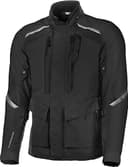
The Carlsbad is a GORE-TEX laminate shell with vents built to move air at off-road speeds, cut for standing on the pegs, with Level 2 D3O at three points. Nothing under half its price matches that on paper. The closest functional alternative is the Fly Racing Terra Trek: a 600D textile ADV jacket with large zip vents front, back and on the arms — which is the Carlsbad’s actual party trick, air at low speed — plus removable waterproof and thermal liners and armor pockets throughout. Two things it does not do, both on its card: the liner-based waterproofing means the outer shell wets out in sustained rain in a way a laminate does not, and Fly publishes no CE certification for the included armor.
If you want the laminate behavior rather than the liner, our Carlsbad versus Andes V3 head-to-head runs that exact axis — laminate against in-shell membrane at a four-times price gap — and it is the page to read before you decide the cheaper route is a false economy. It is sometimes not, and sometimes very much is.
If you were shopping the Latitude (the road-touring shell)
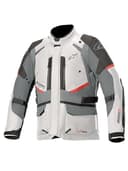
Here the alternative is stronger, because the Latitude publishes less than the Carlsbad. The Alpinestars Andes V3 Drystar is the adventure-touring value benchmark on this site: a Drystar waterproof breathable membrane built into the shell rather than zipped into it, a removable thermal liner, and CE-certified protectors at the shoulders and elbows in the box, for roughly a quarter of what the GORE-TEX flagships cost. The honest cost is on its card too: the back protector is a foam pad, so a certified insert is a separate purchase — our armor under $200 page covers that fix for a fraction of the saving, and it is the single best use of the money you did not spend on a KLIM.
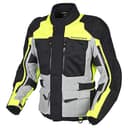
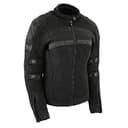
If your riding is a commute through weather rather than distance, the ScorpionEXO Yosemite XDR is the three-season answer: a 600D textile with a zip-out waterproof membrane and a thermal layer, CE armor at the shoulders and elbows, a back-pad pocket and hi-vis panels. Scorpion publishes no garment class for it, which is the category norm rather than a Scorpion failing.
If you were shopping a KLIM pant
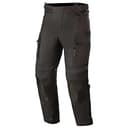
This is where the gap is widest and where it is worth being blunt. The Carlsbad Pant publishes a CE AA class to EN 17092-3 and Level 2 armor at the hip and the knee, on a GORE-TEX laminate. The Alpinestars Andes V3 Drystar Pant is the mid-price alternative most riders should start with — a fixed Drystar membrane rated 5000 mm, a detachable thermal layer, direct vent openings, and sizes S–5XL in Regular, Short and Long, which almost nothing else in the category offers. What Alpinestars publishes for protection is the phrase “CE-Certified Garment, A Class” with no standard named and no armor level anywhere on the page. A is the lowest of the three armored EN 17092 classes. Good pant; read the label in the pocket before you trust the armor, and our riding-pants ranking shows the whole ladder including the one mid-price pant that publishes both numbers.
If you were shopping a KLIM glove
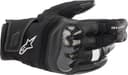
The best news on this page. The Alpinestars SMX-Z Drystar publishes CE EN 13594:2015 Level 1 KP — the same rating level KLIM publishes for the Badlands GTX Long and the Adventure GTX Short — on full-grain goat leather at the palm and impact zones, with a named Drystar membrane rather than an unnamed waterproof claim, at a fraction of the GORE-TEX price. In a registry where four of twenty-four gloves publish a CE rating at all, that is the rare case where the cheaper product and the dearer one carry the same published number. Two real differences: the short hook-and-loop wrist covers less of the joint than a long gauntlet, and there is no insulation — waterproof is not warm. The KLIM Adventure GTX against the SMX-Z Drystar is exactly this decision at two prices, and our gauntlet glove ranking covers the cuff-length question properly.
Three things that are not reasons to leave KLIM
“GORE-TEX is just marketing.” It is not. A laminate bonds the membrane to the outer shell, so the face fabric does not soak and chill you; a drop liner lets the outer wet out and hold water. That is a real behavioral difference on hour three of a wet day, and it is the main thing the cheaper jackets on this page do differently. Our waterproofing explainer covers laminate versus drop liner without taking a side.
“The armor is the same anyway.” Frequently not. KLIM publishes D3O CE Level 2 in the Carlsbad and Rogue CE Level 2 in the Carlsbad Pant. Two of the alternatives on this page publish no CE level at all for their included armor, and both cards say so. CE armor ratings explained covers what Level 1 and Level 2 actually measure — and the good news is that armor is swappable, which a garment class is not.
“The class on the label does not matter.” EN 17092 tests the garment — abrasion, tear and seam strength — and it is the only published number that describes the jacket rather than the pads inside it. EN 17092 explained counts how few garments at any price publish a class, which is the real story of this category and the reason a KLIM premium is not purely a logo.
Where to go from here
If you want the whole field rather than the KLIM-shaped slice of it, our best motorcycle jackets ranking spans every budget, the adventure-touring page ranks this exact category with both KLIMs in it, and the waterproof page sorts on the membrane rather than the use case. If the budget is tighter than anything here, our budget jacket ranking goes lower and names what disappears. And alternatives to Shoei runs the same exercise one layer up, on the only gear class with a legally mandated standard in the US.