How a price band gets ranked instead of a helmet type
A roundup that spans a budget rather than a category has to admit something up front: the helmets on it are not substitutes for one another. An open-face helmet and a full-face helmet are different pieces of safety equipment, not trim levels of the same one. So the criteria below are applied in order, and that order is what produced the ranking — not a score, not a star rating, and certainly not a test we did not run.
1. What the maker publishes above the DOT floor
DOT FMVSS 218 is a self-certification: the maker declares conformance and NHTSA buys random samples off shelves to re-test. It is a real standard with real teeth, and it is also the bare minimum for legal sale in the US. Anything beyond it is a test the maker chose to pay for.
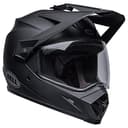
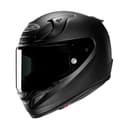
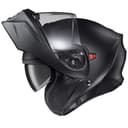
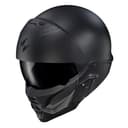
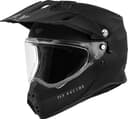
In this band that choice is close to universal, which is exactly what makes the band interesting. The Bell MX-9 Adventure publishes ECE 22.06 by name — the current revision, not the superseded 22.05 — and adds a MIPS liner, and it is the only helmet we track at this price that does both. The HJC RPHA 12 publishes ECE 22.06 as well. The ScorpionEXO GT930 publishes ECE 22.05, the previous revision, and says so. The Fly Racing Trekker publishes DOT and ECE without naming a revision, which is honest but less useful. The ScorpionEXO Covert 2 publishes DOT only — it is on this page for what it does, not for what it is certified to, and the card says so.
Read that list again and notice the gap in it: no helmet in this band publishes a SNELL rating. Six helmets in our registry do, and every one of them is either priced well above $300 or, on the day we built this page, had no live offer to buy. Our SNELL-certified helmet list is cross-checked against Snell’s own published certification lists rather than against retailer copy, and it is the page to read if a SNELL sticker is the thing you are shopping for. Under $300, it is not on the menu.
2. Shell material, and whether a weight is published at all
Three shell families show up here. Injection-molded polycarbonate is the default: cheap to tool, heavier, entirely legitimate, and what the Bell and both Scorpions use. Poly-alloy sits alongside it at the budget end and is what the Trekker uses. And then there is the outlier — HJC’s PIM EVO composite of carbon-aramid hybrid, carbon, glass and natural fibers, a construction that normally lives several hundred dollars above this page.
Weight is the spec most likely to be missing, and we do not estimate it. Two of these five publish a claimed figure: the MX-9 Adventure at about 1,696 g and the GT930 at about 1,810 g — both heavy, and both heavy for a reason you can point at (a MIPS layer and a peak on one, a removable chin bar and flip hinge on the other). The other three publish nothing, so their spec tables read “Check current listing” and they simply cannot be ranked on weight. Our lightest-helmet ranking sorts the whole registry by published weight and shows how many makers publish nothing at all, and how much a motorcycle helmet weighs explains why a 200-gram difference is felt in the neck rather than in the hand.
3. What comes in the box
This band is generous in a way the band below it is not, and the contents are where real money hides. A Pinlock-ready shield plus the insert, a second dark shield, a drop-down internal sun visor, comms-sized speaker pockets, a removable washable liner — each one is something you would otherwise buy separately, and a Pinlock insert alone is a meaningful fraction of a budget helmet.
The RPHA 12 ships with a clear and a dark smoke HJ-42 shield plus the Pinlock insert, which is the most generous box here. The GT930 and the Covert 2 both carry drop-down sun visors, and the Covert 2 adds a clear visor for night riding. The MX-9 Adventure supports three configurations — peak and goggles, peak and shield, or shield alone — so one helmet covers commuting and trail days without a second purchase.
4. Fit and head shape, which outrank everything above
A helmet that does not fit cannot protect you properly no matter what it is certified to. That is not a slogan; it is the reason a cheaper helmet that fits beats a dearer one that does not. Every helmet on this page is cut for an intermediate oval, the most common Western head shape, and that is also why riders with long-oval or round-oval heads find mid-priced helmets uncomfortable in a way they often cannot name. Measure first — our helmet sizing guide covers the measurement and the shape, head shapes covers why two helmets in the same stated size feel different, and the per-brand size chart shows how far apart HJC’s and Scorpion’s own published charts sit for the same measured head.
The ADV shape is over-represented here, and that is not an accident
Two of the five picks are adventure helmets, and a third converts into one. That is what the $200–$300 block actually contains, in our registry and on the shelf: adventure helmets are built on polycarbonate shells with a peak and a big eye port, they sell in volume to riders who expect to scuff them, and the category’s price floor sits right in this band. Street sport helmets at the same money are mostly previous-generation models.
If you never leave pavement, that matters in one practical way: a peak catches air. At highway speed an ADV peak lifts and tugs at the neck, and every maker that sells one also sells a way to remove it. Both the MX-9 Adventure and the Trekker take their peaks off, which turns them into slightly tall full-face helmets rather than quiet ones. If your riding is all highway, the honest answer on this page is the RPHA 12 at number two — it is a street full-face, it is composite, it publishes ECE 22.06, and it is the cheapest helmet here. Our dual-sport helmet ranking covers the ADV shape properly, including what the peak is for off-road.
MIPS, and what one layer is and is not
The MX-9 Adventure leads this page partly on its MIPS liner, so it is worth saying precisely what that is. MIPS is a low-friction layer between the head and the EPS that lets the shell rotate a few millimeters relative to the head in an angled impact. It is aimed at rotational forces, which are the mechanism most associated with diffuse brain injury, and it is not a second shell, a certification, or a guarantee. Our MIPS explainer sources the claims to MIPS’s own published material rather than to retailer copy, and the safest motorcycle helmets ranking sorts the registry purely on what makers publish, including which helmets add rotational management.
One more note on the band, because it is the most common mistake we see at this money. A convertible helmet — the GT930 with its chin bar removed, or the Covert 2 with its mask fitted — is certified in the configuration the maker tested. Scorpion is explicit that the Covert 2’s removable front is a wind and debris cover rather than a certified chin bar, and the GT930 in open-face mode is an open-face helmet with everything that implies. Are open-face helmets safe? puts numbers on the chin-impact share, and open-face vs full-face is the shorter version of the same decision.
If your ceiling is lower, or higher
If $300 is a stretch rather than a budget, the best helmets under $200 works the band below this one and is explicit about what disappears down there. Our safest budget helmets goes lower again and names the three rules for buying cheap without buying badly.
If you can stretch upward, the next real step is not a nicer polycarbonate helmet — it is a composite shell in more shell sizes, a SNELL rating, or both. Our overall best helmets ranking spans every budget, and the quietest helmets page is the one to read if wind noise is what actually bothers you, because noise control is a sealing and aerodynamics problem that this band does not solve.
And one thing that costs nothing. A helmet’s EPS liner crushes once and does not recover, so replace any helmet after a significant impact even if the shell looks fine, and roughly every five years otherwise as the liner and comfort foam age. When to replace a motorcycle helmet covers the signs worth acting on.
One band further up, the pattern this page is built on stops repeating. The best helmets under $500 counts the $300–$500 block and finds no helmet adding a third certification at all — what the extra money buys there is composite shell material, more shell sizes and box contents, which is a different argument from this one. And if a flagship is what you were really shopping, alternatives to Shoei sorts the non-Shoei options by which Shoei you were looking at.