How to read a “CE Level 2” claim on a $40 armor set
This is the most useful thing on the page, so it goes first and it is not buried in a FAQ.
What a certification actually looks like
The European impact standards for motorcycle armor are specific documents with specific test rigs. EN 1621-1 covers limb protectors — shoulders and elbows on this page. EN 1621-2 covers back protectors and has its own rig and its own thresholds. Each publishes a Level 1 or Level 2 result, where Level 2 permits roughly half the transmitted force Level 1 does.
A product that has been through that testing can say so precisely, and the makers that have paid for it do: “CE EN 1621-2 Level 2”, “CE EN 1621-1:2012 Level 1”. You can look up the standard. You can compare two products rated against the same one. When a listing drops the standard and keeps the level, you have lost both of those abilities, and the words that remain are the marketing half of the sentence.
Three things to check instead, when the standard is missing
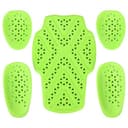
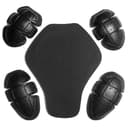
Which pieces are included, and at what claimed level. The KEMIMOTO set claims Level 2 for the back protector and CE 2 for the elbow and shoulder pieces — a complete jacket’s worth. The Jackets 4 Bikes set claims Level 1 across all five pieces. A set that quietly includes a Level 1 back plate and Level 2 limb pads is the common bait, so read per piece rather than per box.
Whether it will physically sit in your pockets. Both loose sets here use universal insert shapes, and both cards say universal shapes may not sit perfectly in every jacket. Armor that is too small rattles around the pocket and ends up off the joint; armor that is too large will not seat at all. Measure the pocket, not the jacket.
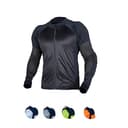
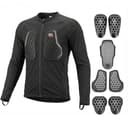
Whether the format suits how you ride. Perforated polymer plates (the KEMIMOTO set) are cooler than solid foam. The armored shirts carry the armor on a stretch mesh chassis, which means it stays on the joints when you change jackets — genuinely useful if you own a mesh summer jacket with no armor at all.
The four picks, and who each is for
KEMIMOTO CE Level 2 Armor Set. For the rider upgrading a budget jacket that shipped with armor pockets and no armor. It is the only complete back, elbow and shoulder set we track that claims the higher tier, and perforated construction keeps heat build-up down. The caveat is the page’s whole thesis: it is a marketplace brand with no independent lab data behind the listing’s claim.
Wicked Stock Mesh Armored Shirt. For the rider who wants the higher claimed tier in a base layer rather than loose inserts. Stretch mesh that layers under a jacket without bunching, removable armor so the shirt washes normally. Level 2 armor is thicker and less flexible than Level 1, which you will feel.
KEMIMOTO Mesh Armored Shirt. For hot-weather riders who want armor at the shoulders, elbows and back without a jacket over it. Full mesh is the coolest way to carry armor, and it is cheap enough to own alongside a proper jacket rather than instead of one — which is exactly how it should be used.
Jackets 4 Bikes 5-Piece Set. For filling a cheap jacket’s pockets for the least money possible. It is the floor of the category, it claims Level 1 across all five pieces, and it costs less than a single premium insert. If the choice is this or empty pockets, this wins without an argument.
Where to spend instead, if you can
The back is where the upgrade pays most, and it is cheap enough to be worth saying twice. For roughly fifty dollars — not much more than the sets on this page — you can buy a back insert from a maker that publishes CE EN 1621-2 Level 2 by name, with the standard, the revision and the level all stated. That is a different class of claim, and armor under $200 is built around exactly that arithmetic: twelve of our thirty-six pieces carry a Level 2 claim, and the cheapest piece with a named-standard Level 2 rating costs a quarter of that page’s ceiling.
The honest order of purchase, then: if your jacket’s back pocket is empty, buy a named-standard Level 2 insert for the back and one of the sets here for the shoulders and elbows. You get the strongest published claim where it matters most, and the unverified claim only in the positions where the alternative was nothing. Do I need a back protector? walks the 90-second test on the pad already in your jacket, and CE armor ratings explained lists the three label claims worth distrusting — of which this page’s is the first.
What this page is not
It is not a jacket page, and the distinction matters more here than anywhere else on the site. An armored shirt protects joints; it does nothing for abrasion, and EN 17092 — the garment standard for abrasion, tear and seam strength — does not apply to any product on this page. EN 17092 explained covers what a garment class means and how few garments publish one, and jackets with armor included is the page to read if what you actually want is one purchase that covers both.
It is also not the airbag page. If your budget runs several times this page’s, airbag vests and airbag vest versus back protector are the honest comparison at that level. Armored base layers ranks the shirt format on its own terms including the non-armored thermal layers, and the best motorcycle armor ranking covers every position in buying order.