Apex & Armor

Best Mesh Motorcycle Intercoms

Buying a mesh intercom is not buying a feature, it is joining a network — and the two networks on the market do not talk to each other. Pick the ecosystem first, the unit second.

By Stephen V.Last updated How we research

The best mesh motorcycle intercom is the Sena 60S EVO — for the rider who wants Sena’s newest platform and the deepest audio specification in the category, with Mesh 3.0, the Wave intercom, IPX7 and 40 mm speakers tuned by Bose. If the budget matters more than the badge, the Sena Spider RT1 is the budget pick and the most under-rated unit in comms: it publishes the same Mesh Intercom 3.0 network as the flagship and up to 20 hours of talk time, for a fraction of the money.

Before any of the picks, the fact that decides most mesh purchases and appears on almost no product page: mesh does not work across brands. Cardo’s 2nd Gen DMC and Sena’s Mesh Intercom 3.0 are separate, proprietary protocols. Two riders on different brands fall back to a Bluetooth link to talk to each other — which means they lose the self-healing behavior, the large rider counts and the join-and-leave-freely convenience that is the entire reason either of them bought mesh. So the first question is not which unit is best. It is which network your regular riding group is already on, and if your group runs Cardo, the right answer on this page is a Cardo even where a Sena outspecs it.

The second thing worth knowing before you shop, because it inverts the usual logic of a price ladder: the mesh network itself does not get better as you spend more. Cardo publishes 2nd Gen DMC with up to 31 riders and about a mile unit-to-unit on the Packtalk Neo — the cheapest Packtalk we track — and the same network generation on the Packtalk-S. Sena publishes Mesh Intercom 3.0 on the Spider RT1 at the bottom of its mesh range and on the 60S EVO at the top. What the extra money buys is audio tuning, mounting hardware, water-ingress ratings, controls and warranty, all of which are real and none of which is the network.

Nobody publishes an audio measurement for a motorcycle intercom — not Sena, not Cardo, not us. There is no decibel figure, no frequency response and no wind-noise rating anywhere in this category, so every pick below is ranked on the published network generation, rider count, talk time, driver size, audio-brand tuning and IP rating. Our methodology page says exactly what we do instead of testing. Every price is live and date-stamped.

How this is funded: we earn a commission if you buy through our links, at no extra cost to you. It never changes which gear we recommend, and we’ll tell you plainly when to skip a pick. Full disclosure.

Quick picks

Ranked on certification, spec and buyer fit. Select a row to jump to the full write-up. We haven’t crash-tested this gear — here is exactly what we do instead.

#GearBest forPrice
1
Sena 60S EVO

Sena 60S EVO

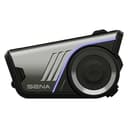
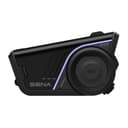
Sena's current top tier, and the first of its units tuned by Bose rather than Harman Kardon. Mesh Intercom 3.0 plus the cellular Wave intercom, IPX7 waterproofing and the longest talk time Sena publishes anywhere in the range. It is also the most expensive way to join the same mesh network a 50S joins.

Best overall mesh unit
$367.20 · View on Amazon

$459.0020% off

Price as of November 24, 2026. #ad How we’re funded

2
Cardo Packtalk Neo

Cardo Packtalk Neo

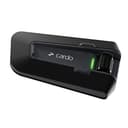
The cheapest unit on Cardo's current mesh network, and it is on exactly the same network as the most expensive one. Cardo publishes 2nd Generation DMC, up to 31 riders, 1.6 km (1 mi) unit-to-unit, 40 mm Sound by JBL speakers, 13 hours of talk time, IP67 and Bluetooth 5.2 for the Neo and the Edge alike. What you give up is the magnetic Air Mount, the ability to charge while riding, and one year of warranty.

Cheapest way onto Cardo's DMC
$269.96 · View on Amazon

$359.9525% off

Price as of November 24, 2026. #ad How we’re funded

3
Sena 60S

Sena 60S

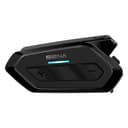
The 60 Series without the Bose tuning: Mesh Intercom 3.0, Wave, IPX7 and second-generation Harman Kardon speakers, with the Jog Dial kept. Sena publishes 24 hours of Bluetooth talk time against the 50S's 16 — the battery, not the network, is what the newer platform actually buys you.

Best Sena value at the top of the range
$439.00 · View on Amazon

Price as of November 24, 2026. #ad How we’re funded

4
Sena 50R

Sena 50R

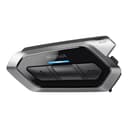
The 50S's network and speakers in a low-profile, three-button module. Same Mesh Intercom 3.0, same Harman Kardon 40 mm drivers, no Jog Dial — and Sena publishes slightly shorter talk time. Buy it if you want the 50-series mesh without a dial on the side of your helmet.

Slimmest module with proven mesh
$262.50 · View on Amazon

$375.0030% off

Price as of November 24, 2026. #ad How we’re funded

5
Cardo Packtalk-S for Shoei Gen 3

Cardo Packtalk-S for Shoei Gen 3

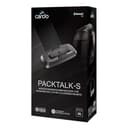
A Packtalk built into the shape of one helmet family rather than clamped onto it. Cardo states it fits the Shoei Neotec 3, GT-Air 3 and J-Cruise 3 only, and publishes the same 2nd Generation DMC, 31 riders, 1.6 km unit-to-unit range, 40 mm Sound by JBL audio, Bluetooth 5.2, IP67 and 3-year warranty as the universal units. If you already own one of those three helmets, this is the tidiest way to add mesh.

Best for a Shoei Gen 3 helmet
$314.96 · View on Amazon

$419.9525% off

Price as of November 24, 2026. #ad How we’re funded

6
Sena Spider RT1

Sena Spider RT1

The cheapest way onto Sena's mesh network, and the longest-running one: Sena publishes up to 20 hours of talk time here, more than either 50-series unit. Three buttons instead of the Spider ST1's Jog Dial, and no Harman Kardon badge on the speakers — that is where the money went.

Budget pick — real Mesh 3.0 for the least money
$196.64 · View on Amazon

$239.0018% off

Price as of November 24, 2026. #ad How we’re funded

The picks in full

#1Best overall mesh unit

Sena 60S EVO

Sena's current top tier, and the first of its units tuned by Bose rather than Harman Kardon. Mesh Intercom 3.0 plus the cellular Wave intercom, IPX7 waterproofing and the longest talk time Sena publishes anywhere in the range. It is also the most expensive way to join the same mesh network a 50S joins.

Strengths

  • Mesh Intercom 3.0 and 2.0 plus Wave — Group Mesh up to 24, Open Mesh across 6 channels
  • Sena publishes 27 h Bluetooth / 19 h mesh talk time on a 1.5 h charge
  • IPX7 waterproof rating, magnetic mount and a glove-friendly jog dial

Trade-offs

  • Top-tier price for the same 2 km working distance a 50S publishes
  • Sound by Bose is a tuning claim we cannot verify by ear — we own no units
Safety standardCheck current listing
Construction40 mm speakers tuned by Bose, IPX7, jog dial
Key featureMesh 3.0 + Wave intercom, IPX7
Fit / sizingUniversal helmet mount, dual clamp kits included
Best forRiders who want Sena's newest hardware and will pay top-tier money for it

Specs and certification read from the manufacturer and retailer listing, on August 31, 2026. “Check current listing” means the maker doesn’t publish that figure — we won’t guess it.

#2Cheapest way onto Cardo's DMC

Cardo Packtalk Neo

The cheapest unit on Cardo's current mesh network, and it is on exactly the same network as the most expensive one. Cardo publishes 2nd Generation DMC, up to 31 riders, 1.6 km (1 mi) unit-to-unit, 40 mm Sound by JBL speakers, 13 hours of talk time, IP67 and Bluetooth 5.2 for the Neo and the Edge alike. What you give up is the magnetic Air Mount, the ability to charge while riding, and one year of warranty.

Strengths

  • 2nd Generation DMC — the same network, range and 31-rider group size as the Edge and Pro
  • 40 mm Sound by JBL speakers and the same 13 h talk time as the flagships
  • IP67 waterproof, Bluetooth 5.2, and 2 h of talk from a 20-minute charge

Trade-offs

  • Clickable mount instead of the Edge's magnetic Air Mount
  • Cardo says the Neo does not support charging while you ride — a real limit on long days
  • 2-year warranty against the Edge's 3
Safety standardCheck current listing
ConstructionIP67-rated, 40 mm Sound by JBL speakers, clickable mount
Key feature2nd Gen DMC mesh, 31 riders, 1 mi unit-to-unit
Fit / sizingUniversal helmet mount
Best forGroup riders who want Cardo's mesh without paying for the Air Mount

Specs and certification read from the manufacturer and retailer listing, on August 31, 2026. “Check current listing” means the maker doesn’t publish that figure — we won’t guess it.

#3Best Sena value at the top of the range

Sena 60S

The 60 Series without the Bose tuning: Mesh Intercom 3.0, Wave, IPX7 and second-generation Harman Kardon speakers, with the Jog Dial kept. Sena publishes 24 hours of Bluetooth talk time against the 50S's 16 — the battery, not the network, is what the newer platform actually buys you.

Strengths

  • Mesh Intercom 3.0 and 2.0 plus Wave, Group Mesh up to 24 riders
  • Sena publishes 24 h Bluetooth / 17 h mesh talk time on a 1.5 h charge
  • IPX7 waterproof rating and second-generation Harman Kardon 40 mm speakers

Trade-offs

  • Same 2 km published working distance as the far cheaper 50S
  • The 60S EVO sits above it, so this is already the middle of the top tier
Safety standardCheck current listing
Construction40 mm 2nd-gen Harman Kardon speakers, IPX7, Jog Dial
Key featureMesh 3.0 + Wave intercom, IPX7
Fit / sizingUniversal helmet mount
Best forRiders upgrading from a 50-series who want the newer platform and the Jog Dial

Specs and certification read from the manufacturer and retailer listing, on August 31, 2026. “Check current listing” means the maker doesn’t publish that figure — we won’t guess it.

#4Slimmest module with proven mesh

Sena 50R

The 50S's network and speakers in a low-profile, three-button module. Same Mesh Intercom 3.0, same Harman Kardon 40 mm drivers, no Jog Dial — and Sena publishes slightly shorter talk time. Buy it if you want the 50-series mesh without a dial on the side of your helmet.

Strengths

  • Mesh Intercom 3.0 — up to 24 riders in Group Mesh, same as the 50S
  • Harman Kardon 40 mm speakers, identical to the 50S
  • Slim 97 x 48 x 27 mm module; 20 minutes of charge gives 6 h Bluetooth talk

Trade-offs

  • Three buttons are harder to work in thick winter gloves than the 50S dial
  • Sena publishes 11 h mesh talk time against the 50S's 13 h
Safety standardCheck current listing
ConstructionHarman Kardon 40 mm speakers, three-button control
Key featureMesh Intercom 3.0, low-profile module
Fit / sizingUniversal helmet mount
Best forRiders who want proven mesh in the slimmest module Sena makes

Specs and certification read from the manufacturer and retailer listing, on August 31, 2026. “Check current listing” means the maker doesn’t publish that figure — we won’t guess it.

#5Best for a Shoei Gen 3 helmet

Cardo Packtalk-S for Shoei Gen 3

A Packtalk built into the shape of one helmet family rather than clamped onto it. Cardo states it fits the Shoei Neotec 3, GT-Air 3 and J-Cruise 3 only, and publishes the same 2nd Generation DMC, 31 riders, 1.6 km unit-to-unit range, 40 mm Sound by JBL audio, Bluetooth 5.2, IP67 and 3-year warranty as the universal units. If you already own one of those three helmets, this is the tidiest way to add mesh.

Strengths

  • Purpose-fit for the Shoei Gen 3 helmets — no clamp hanging off the shell
  • Same 2nd Generation DMC network, 31-rider group and 1.6 km unit-to-unit range as the Edge
  • 40 mm Sound by JBL audio, Bluetooth 5.2, IP67 and a 3-year warranty

Trade-offs

  • Cardo states it is compatible with those three Shoei helmets ONLY — it does not move to another lid
  • Costs more than the universal Neo that runs the identical network
  • Ties the electronics to a helmet that will eventually be retired after a crash
Safety standardCheck current listing
ConstructionIP67-rated, 40 mm Sound by JBL audio, Shoei Gen 3 integration
Key feature2nd Gen DMC mesh, Shoei Neotec 3 / GT-Air 3 / J-Cruise 3 only
Fit / sizingFits Shoei Neotec 3, GT-Air 3 and J-Cruise 3 helmets only
Best forOwners of a Shoei Neotec 3, GT-Air 3 or J-Cruise 3

Specs and certification read from the manufacturer and retailer listing, on August 31, 2026. “Check current listing” means the maker doesn’t publish that figure — we won’t guess it.

#6Budget pick — real Mesh 3.0 for the least money

Sena Spider RT1

The cheapest way onto Sena's mesh network, and the longest-running one: Sena publishes up to 20 hours of talk time here, more than either 50-series unit. Three buttons instead of the Spider ST1's Jog Dial, and no Harman Kardon badge on the speakers — that is where the money went.

Strengths

  • Mesh Intercom 3.0 — Group Mesh up to 24 riders, Open Mesh across six channels
  • Up to 20 h talk time, the longest Sena publishes in the Spider line
  • Low-profile module with Bluetooth 5.2 for phone and navigation audio

Trade-offs

  • Three-button control is fiddlier in gloves than the ST1's Jog Dial
  • No Harman Kardon speakers and fewer features than the 50-series
Safety standardCheck current listing
Construction40 mm speaker drivers, three-button control, Bluetooth 5.2
Key featureMesh Intercom 3.0, up to 20 h talk time
Fit / sizingUniversal helmet mount, low-profile module
Best forGroup riders who want mesh at the lowest price and don't need premium audio

Specs and certification read from the manufacturer and retailer listing, on August 31, 2026. “Check current listing” means the maker doesn’t publish that figure — we won’t guess it.

Pick the network first

Cardo: 2nd Gen DMC

Cardo publishes 2nd Gen DMC for both Cardo units here, with up to 31 riders and about one mile unit-to-unit on the Packtalk Neo. Both Cardos on this page publish IP67 and 40 mm Sound by JBL speakers, which is the tuning Cardo reserves for the Freecom and Packtalk families and does not apply to its cheaper Spirit units. The Neo is the cheapest route onto that network; what it gives up against the Packtalk Edge above it is narrow and specific, and our Neo versus Edge comparison runs it line by line — eleven of fourteen published spec rows are identical, and the premium buys the clickable Air Mount, charge-while-riding, and a third warranty year.

Sena: Mesh Intercom 3.0

Sena publishes Mesh Intercom 3.0 across four units on this page, from the Spider RT1 at the bottom to the 60S EVO at the top, and adds the Wave intercom on the 60-series — Sena’s mobile-data-based mode, which is a different thing from mesh and is published separately. Sena’s ladder is where the audio specification climbs: the 50R and 60S publish Harman Kardon 40 mm drivers (second-generation on the 60S), the 60S EVO publishes 40 mm tuned by Bose, and the Spider RT1 publishes 40 mm drivers with no audio-brand tuning named at all. The 60-series units also publish IPX7.

Controls are the other Sena ladder, and they matter more in winter than any spec on this page. The 60S EVO and 60S publish the Jog Dial — a rotating wheel you can find and turn in a thick glove. The 50R publishes three-button control in exchange for the slimmest module Sena makes, and the Spider RT1 does the same. If you ride in winter gauntlets, try the controls before you decide the spec sheet has answered the question.

What the ranking is built on

1. Published network generation and rider count

All six publish a current-generation mesh network, which is why none of them is ranked below the others on the network itself. Cardo publishes a specific rider ceiling (31) and a specific unit-to-unit distance (about a mile) for the Neo; Sena publishes Mesh 3.0 without attaching a single headline rider number to every model. We quote what each maker publishes and we do not convert one into the other, because the two protocols measure and describe themselves differently and a comparison of the two numbers would be our invention rather than their data.

2. Talk time, which does not track price

This is the most useful number on the page and the one buyers skip. The Spider RT1 publishes up to 20 hours of talk time — at the bottom of the mesh market. Cardo publishes 13 hours across its Packtalk and Freecom families alike, so a Packtalk Pro and a Freecom 4X carry the same published figure. If you ride all-day distances and charge overnight rather than on the bike, the cheapest unit on this page is the one that publishes the longest run time, and that is not a mistake in the spec sheet.

3. Mount, fitment and the one unit that fits almost nothing

Five of the six publish a universal helmet mount. The Cardo Packtalk-S for Shoei Gen 3 does not: Cardo publishes it as fitting the Shoei Neotec 3, GT-Air 3 and J-Cruise 3 only. That is a hard constraint and it is the first line on its card. It is also the closest thing on the market to a built-in system without buying a helmet with the electronics inside it, which is why it is here rather than excluded — if you own one of those three Shoeis it is arguably the best unit on this page, and if you do not, it is the worst possible purchase. Our Shoei alternatives page notes the same thing from the helmet side: a Cardo engineered into a specific shell is the one Shoei advantage nobody else can sell you.

4. Water ingress, read literally

Both Cardos publish IP67. The 60-series Senas publish IPX7. The 50R and the Spider RT1 publish no IP figure in the specification we read, and their cards say so rather than inheriting a rating from a sibling model. An IP number is a tested claim; the word “waterproof” is not the same claim, and this category uses both words loosely.

Three things that are not reasons to pick one of these

A bigger published rider count. Thirty-one riders is a specification, not a riding group. If you ride with four people, every unit on this page covers you with room to spare, and the choice should be made on controls, audio and whether your friends are already on the other network.

A directly compared range figure. Every distance in this category is a line-of-sight maximum in open terrain. A bend, a truck or a hill takes it apart. Comparing Cardo’s mile to a Sena figure measured and described differently would be a comparison we invented.

The generation name on the box. “3.0” and “2nd Gen” are each maker’s own naming for its own protocol, and they are not versions of one standard. A higher number on a Sena box tells you nothing about a Cardo.

If mesh is not the right answer for you

It frequently is not, and the honest version of this page has to say so. If you ride alone, or always two-up with the same person, a mesh network is paying for a feature you will never use — the rider-and-passenger page covers that case, and the best intercoms under $200 is the band where the sensible two-up answers live. If the budget is the constraint, our budget intercom ranking goes further down and is explicit about what a Bluetooth chain cannot do. Mesh versus Bluetooth is the decision itself, written without a thumb on the scale.

And if you have already settled on a brand, both sides of the argument are on this site: the Cardo range, the Sena range, Cardo versus Sena head to head, and the two pages that argue for leaving — alternatives to Sena and alternatives to the Packtalk. Whichever unit you buy, installing it properly matters more than the model, and the one rule that is not negotiable is in that guide: never cut the EPS.
Frequently asked questions

Do Cardo and Sena mesh work together?

No. Cardo's 2nd Gen DMC and Sena's Mesh Intercom 3.0 are separate proprietary protocols. Two riders on different brands can still talk, but only over a Bluetooth link — which gives up the self-healing network, the large rider counts and the join-and-leave-freely behavior that is the point of mesh. If your regular group already runs one brand, buy that brand.

What is the cheapest mesh motorcycle intercom?

In our registry, the Sena Spider RT1 — Sena publishes Mesh Intercom 3.0 and up to 20 hours of talk time for it, and on our live price check it sits below $200. It gives up the Jog Dial for three-button control and publishes no audio-brand tuning for its 40 mm drivers. The cheapest way onto Cardo's network is the Packtalk Neo, which publishes 2nd Gen DMC with up to 31 riders.

Does a more expensive mesh intercom have a better network?

Not in either range. Cardo publishes 2nd Gen DMC on the Packtalk Neo and on the Packtalk-S; Sena publishes Mesh 3.0 on the Spider RT1 and on the 60S EVO. What the extra money buys is audio tuning (Harman Kardon, Bose, Sound by JBL), mounting hardware, published IP ratings, glove-friendly controls and warranty length. Those are real improvements. The network is not one of them.

Which mesh intercom has the best sound?

Nobody publishes an audio measurement for a motorcycle intercom, so we will not rank sound. What is published is the hardware: 40 mm drivers tuned by Bose on the 60S EVO, second-generation Harman Kardon 40 mm on the 60S, Harman Kardon 40 mm on the 50R, 40 mm Sound by JBL on both Cardos, and 40 mm with no tuning named on the Spider RT1. Speaker size and a tuning partner are specifications; sound quality in a helmet at 70 mph is not something anyone has measured for you.

Will a mesh intercom fit my helmet?

Five of the six units here publish a universal helmet mount and fit the great majority of full-face, modular and open-face helmets with speaker pockets. The exception is the Cardo Packtalk-S for Shoei Gen 3, which Cardo publishes as fitting the Shoei Neotec 3, GT-Air 3 and J-Cruise 3 only. Check your helmet's speaker pocket depth before you buy anything, and never modify the EPS liner to make a speaker fit.

Sources

  • Sena — 60S EVO Motorcycle Communication Headset — Sena's published 60S EVO specs: Mesh Intercom 3.0 and 2.0 plus Wave, Group Mesh up to 24 participants, 2 km (1.2 mi) range in open terrain, Bluetooth intercom up to 4 participants, 40 mm speakers with Sound by Bose, 27 h Bluetooth / 19 h mesh talk time, 1.5 h charge, IPX7 waterproof (accessed August 31, 2026)
  • Sena — 60S Motorcycle Mesh Communication System — Sena's published 60S specs: Mesh Intercom 3.0 and 2.0 plus Wave, Group Mesh up to 24, 2 km (1.2 mi) range in open terrain, 40 mm second-generation Harman Kardon speakers, 24 h Bluetooth / 17 h mesh talk time, 1.5 h charge, IPX7 waterproof, jog dial (accessed August 31, 2026)
  • Sena — 50R Motorcycle Mesh Communication System — Sena's published 50R specs: Mesh Intercom 3.0, up to 24 riders, 40 mm Harman Kardon speakers, 11 h mesh / 13 h Bluetooth talk time, 2.5 h charge, 97 x 48 x 27 mm module (accessed August 31, 2026)
  • Sena — SPIDER RT1 Motorcycle Mesh Communication System — Sena's published Spider RT1 specs: Mesh Intercom 3.0, three-button control against the ST1's jog dial, 40 mm drivers, up to 20 h talk time, Bluetooth 5.2 (accessed August 31, 2026)
  • Cardo — PACKTALK NEO — Cardo's published PACKTALK NEO specs: 2nd Generation DMC, "Connect up to 31 riders", range of up to 1.6 km / 1 mi, 40 mm Sound by JBL speakers, IP67, Bluetooth 5.2, clickable mount rather than the Edge's Air Mount, 2 hours of talk time after 20 minutes of USB-C charging, 2-year warranty (accessed August 31, 2026)
  • Cardo — PACKTALK-S for SHOEI Gen 3 helmets — Cardo's published PACKTALK-S specs: compatible with "SHOEI NEOTEC 3, GT-AIR 3, and J-CRUISE 3 helmets only", 2nd Generation Dynamic Mesh Communication, "Connects up to 31 riders", range of up to 1.6 km / 1 mi between two units, 40 mm Sound by JBL audio system, Bluetooth 5.2, IP67 waterproof, 3-year warranty (accessed August 31, 2026)
  • Cardo — Packtalk Neo vs. Edge: What's the Difference? — Cardo's own Neo-versus-Edge article: identical 2nd Generation DMC, "Unit-to-unit range reaches up to 1.6km, and the group range extends to 8km", 40 mm JBL speakers "tuned identically", "13 hours of talk time per charge" and "up to 10 days on standby" for both; the differences are the Air Mount versus the clickable mount, that "The Neo does not support charge-while-riding", and a 3-year versus 2-year warranty (accessed August 31, 2026)
  • Sena — Firmware updates for the 50S & 50R v1.5 — Sena's own release notice for 50S (SP75) and 50R (SP76) firmware v1.5, dated 27 March 2025: "Added Mesh 3.0" — the primary record that the 50-series moved mesh generation by firmware rather than by new hardware (accessed August 31, 2026)

Keep reading

More in Comms