Cardo Packtalk Edge vs Sena 50S
The two flagship mesh intercoms, model against model — how each network actually behaves, the audio hardware, the mounting systems and the controls.
If you have decided you want a flagship mesh intercom, these are the two units the decision usually comes down to. Both do the core job: self-healing mesh networking so riders can drop out and rejoin without collapsing the group, phone and music over Bluetooth, navigation prompts, and voice control. Both are expensive. The differences are real but narrower than the brand arguments suggest.
The short version: Cardo has focused harder on mesh and on the mounting hardware, and its magnetic mount is genuinely better. Sena offers both mesh and traditional Bluetooth intercom in one unit, which matters if your riding group is mixed. Audio comes down to JBL versus Harman Kardon tuning, which is a preference rather than a ranking. If you want the brand-level comparison rather than these two specific models, start with Cardo vs Sena.
How this is funded: we earn a commission if you buy through our links, at no extra cost to you. It never changes which gear we recommend, and we’ll tell you plainly when to skip a pick. Full disclosure.
The mesh specialist
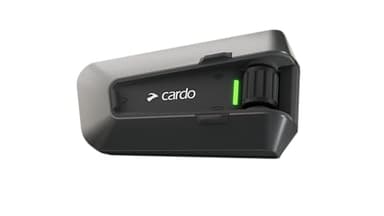
Cardo Packtalk Edge
The intercom most serious riders point to: Cardo's second-gen Dynamic Mesh (DMC) self-heals as riders drop in and out, JBL speakers sound excellent, and the magnetic Air Mount is the best in the class. The premium pick for group touring.
The dual-protocol option
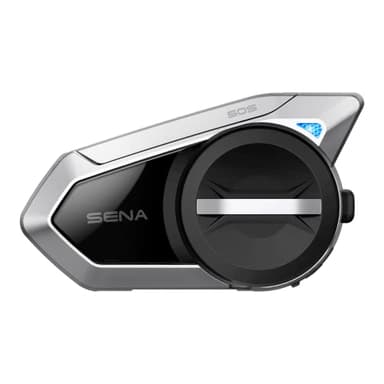
Sena 50S
Sena's mesh benchmark, with Harman Kardon speakers and the signature Jog Dial control that's easy to use in gloves. Sena now publishes Mesh Intercom 3.0 for it — a firmware generation, not new hardware. The main rival to Cardo's Packtalk Edge, and the pick if you prefer Sena's ecosystem and controls.
| Spec | Cardo Packtalk Edge | Sena 50S |
|---|---|---|
| Network type | Mesh (self-healing, dynamic) | Mesh + Bluetooth intercom |
| Audio | JBL-tuned 40 mm drivers | Harman Kardon speakers and mic |
| Mounting | Magnetic Air Mount | Clamp with slide-in unit |
| Controls | Voice control + physical buttons | Voice control + jog dial |
| Group riding | Mesh only | Mesh, or Bluetooth for mixed groups |
| Best suited to | Groups already on mesh; frequent helmet swaps | Mixed groups running older Bluetooth units |
| Price tier | Premium | Premium |
The network difference is the real decision
Mesh and Bluetooth intercom are architecturally different, and if you’re new to this the distinction matters more than any spec on the table above. A Bluetooth intercom builds a chain: rider A connects to B, B to C, C to D. If B turns their unit off or rides out of range, C and D lose the group. A mesh network lets every unit connect to every other unit within range and re-route automatically when someone drops. Riders leave and rejoin without anyone touching a button. We’ve covered the full picture on mesh vs Bluetooth.
Both units here do mesh. The Sena 50S alsodoes traditional Bluetooth intercom, which is the practical reason to choose it: if half your riding group is still on older Bluetooth-only units, the 50S can talk to them and the Packtalk Edge’s mesh cannot. If everyone in your group is buying new, that advantage disappears.
Mounting: Cardo’s clearest win
The Packtalk Edge’s magnetic Air Mount is the single feature most owners cite. The unit snaps on and off with one gloved hand, which sounds trivial until you do it forty times over a tour, or until you own two helmets and want to move the unit between them. The Sena’s clamp-and-slide system works fine and is entirely secure; it just takes two hands and more attention.
If you regularly switch between a touring helmet and an ADV helmet, weight this more heavily than the spec table suggests.
Audio: preference, not ranking
Cardo partners with JBL; Sena partners with Harman Kardon. Both produce a tuned 40 mm driver set that is dramatically better than the generic speakers in budget units. Which one you prefer is a matter of taste — broadly, JBL tuning leans toward bass presence and Harman Kardon toward mid clarity, but helmet acoustics vary so much between shells that the difference between two helmets is larger than the difference between these two speaker sets.
What matters more than either: speaker pocket depth in your helmet. A 40 mm driver pressing on your ear because the recess is shallow will ruin the audio and give you a headache regardless of who tuned it. Check that before you spend flagship money.
Controls and gloves
Sena’s jog dial is a genuinely good glove interface — you can find it by feel and it does volume, track and menu navigation in one control. Cardo uses physical buttons plus a strong voice-control implementation. Riders who dislike talking to their gear tend to prefer the jog dial; riders who use voice commands find the Cardo faster because it skips the interface entirely.
Which should you buy?
Buy the Cardo Packtalk Edge if your group is on mesh or buying new, if you swap the unit between helmets, or if the magnetic mount and voice control appeal to how you actually operate things at 70 mph.
Buy the Sena 50S if your riding group is mixed between mesh and older Bluetooth units, or if you specifically want the jog dial as a gloved interface.
Buy neither if you mostly ride solo and want music, navigation prompts and calls. Flagship mesh is a group-riding feature, and a budget intercom does solo audio for a fraction of the price.
Frequently asked questions
What's the difference between mesh and Bluetooth intercom?
A Bluetooth intercom builds a chain — rider A to B, B to C, C to D — so if one rider in the middle turns off or rides out of range, the riders behind them lose the group. A mesh network connects every unit to every other unit in range and re-routes automatically when someone drops or rejoins, with no re-pairing. For groups of three or more, mesh is a genuinely different experience.
Can a Cardo Packtalk Edge talk to a Sena unit?
Over standard Bluetooth intercom, yes — cross-brand pairing works and has for years, though setup is fiddlier than pairing two units of the same brand and you lose the mesh advantages. Over mesh, no: Cardo's mesh and Sena's mesh are separate proprietary networks and won't join each other. If your group is mixed-brand and wants mesh, everyone needs to be on the same brand.
Is the Sena 50S better because it does both mesh and Bluetooth?
Only if you actually need both. Running both protocols is genuinely useful when part of your riding group is still on older Bluetooth-only units — the 50S can bridge them into the conversation. If everyone in your group is on mesh or buying new, the dual capability is a feature you'll never use, and the decision comes down to mounting, controls and audio preference instead.
Does the magnetic mount on the Cardo actually matter?
More than the spec sheet suggests, for two specific riders: anyone who takes the unit off at every stop (theft, charging, or just habit) and anyone who owns two helmets. Snapping the unit on and off with one gloved hand versus a two-handed slide-and-clamp is a small difference that repeats hundreds of times. If you fit the unit once and leave it, it's irrelevant.
Do I need a flagship intercom if I ride solo?
No. Almost everything you pay for at this price tier is group-riding capability — mesh networking, multi-rider range, seamless rejoin. For solo riding you want music, navigation prompts and phone calls, which a budget unit handles well for a fraction of the cost. Buy a flagship when you start riding in groups regularly, not before.
Sources
- NHTSA — How to Choose the Right Motorcycle Helmet — NHTSA consumer guidance on DOT certification and spotting novelty helmets (accessed July 21, 2026)
Keep reading
Packtalk Edge vs Packtalk Neo
Identical mesh, speakers and talk time on Cardo's own figures — the premium buys three specific things.
Read the comparisonCardo vs Sena
The two intercom giants compared head-to-head on mesh, audio, controls and price.
Read the brand comparisonMesh vs Bluetooth intercoms
Why a Bluetooth chain drops the whole group when one rider turns off, and what mesh changes.
Read the network guideBest motorcycle intercoms
Mesh and Bluetooth systems ranked for group touring, pillion use and value.
See the intercom picksBest Bluetooth motorcycle helmets
Helmets with the intercom built in — no bolt-on module — plus comms-ready lids worth pairing.
See the Bluetooth helmets