Apex & Armor

Best Cardo Intercoms

Every Packtalk runs the same mesh network, at the same range, with the same battery. So what does the extra money actually buy? The Cardo range ranked on what Cardo itself publishes.

By Stephen V.Last updated How we research

Cardo makes the intercom that group tourers argue for, and it sells that intercom in three price tiers that are much closer together than the price tags suggest. Read Cardo’s own specification pages side by side and one fact falls out immediately: the cheapest Packtalk and the most expensive Packtalk are on the same network, at the same published range, with the same battery and the same waterproof rating. That single fact reorganizes the whole range, and it is why the ranking below does not run in price order.

So this page is built around the three questions that actually separate one Cardo from another. Is it a Packtalk or a Freecom? That is the mesh decision, and it is the only one that changes what the unit can do with a group. What does the tier above add? On Cardo’s own comparison the answer is speaker size, the mount, charging while you ride, warranty length and one sensor — not network, not range, not battery. And where does the audio branding stop? Cardo puts “Sound by JBL” on everything from the Freecom up and does not put it on the Spirit, which is the real cliff at the bottom of the range.

Every figure on this page — DMC generation, rider counts, unit-to-unit and group range, speaker size and branding, talk time, IP rating, Bluetooth version, mount type and warranty — was read from Cardo’s own product, blog or firmware release-notes page on 31 August 2026, not from retailer copy. Where Cardo’s own pages disagree with each other, we say so and show both. We have not bench-tested these units and we do not run a lab; intercoms carry no safety certification, so nothing here is a protection claim. Our methodology page sets out exactly what that means.

How this is funded: we earn a commission if you buy through our links, at no extra cost to you. It never changes which gear we recommend, and we’ll tell you plainly when to skip a pick. Full disclosure.

Quick picks

Ranked on certification, spec and buyer fit. Select a row to jump to the full write-up. We haven’t crash-tested this gear — here is exactly what we do instead.

#GearBest forPrice
1
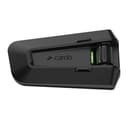
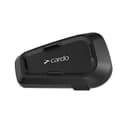
Cardo Packtalk Neo

Cardo Packtalk Neo

The cheapest unit on Cardo's current mesh network, and it is on exactly the same network as the most expensive one. Cardo publishes 2nd Generation DMC, up to 31 riders, 1.6 km (1 mi) unit-to-unit, 40 mm Sound by JBL speakers, 13 hours of talk time, IP67 and Bluetooth 5.2 for the Neo and the Edge alike. What you give up is the magnetic Air Mount, the ability to charge while riding, and one year of warranty.

Best overall
$251.95 · View on Amazon

$359.9530% off

Price as of September 4, 2026. #ad How we’re funded

2
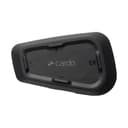
Cardo Packtalk Edge

Cardo Packtalk Edge

The intercom most serious riders point to: Cardo's second-gen Dynamic Mesh (DMC) self-heals as riders drop in and out, JBL speakers sound excellent, and the magnetic Air Mount is the best in the class. The premium pick for group touring.

Best for daily riders
$395.96 · View on Amazon

$439.9510% off

Price as of September 4, 2026. #ad How we’re funded

3
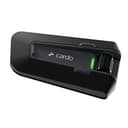
Cardo Packtalk Pro

Cardo Packtalk Pro

The top of Cardo's range, and the only unit here with crash detection. Cardo publishes 45 mm JBL speakers against the Edge's 40 mm, plus auto on/off — on the same 2nd Generation DMC network, the same 1.6 km unit-to-unit range, the same 13 hours and the same IP67 rating as the Edge. Buy it for the sensor and the bigger drivers, not for a better network.

Most capable
$449.95 · View on Amazon

$499.9510% off

Price as of September 4, 2026. #ad How we’re funded

4
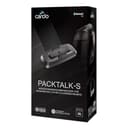
Cardo Packtalk-S for Shoei Gen 3

Cardo Packtalk-S for Shoei Gen 3

A Packtalk built into the shape of one helmet family rather than clamped onto it. Cardo states it fits the Shoei Neotec 3, GT-Air 3 and J-Cruise 3 only, and publishes the same 2nd Generation DMC, 31 riders, 1.6 km unit-to-unit range, 40 mm Sound by JBL audio, Bluetooth 5.2, IP67 and 3-year warranty as the universal units. If you already own one of those three helmets, this is the tidiest way to add mesh.

Best for Shoei Gen 3 helmets
$377.96 · View on Amazon

$419.9510% off

Price as of September 4, 2026. #ad How we’re funded

5
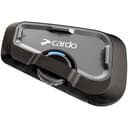
Cardo Freecom 4X

Cardo Freecom 4X

A Bluetooth intercom (not mesh) for up to four riders, with the same JBL speakers as the flagship. The right Cardo for a rider-plus-pillion or a small fixed group who don't need self-healing mesh.

Best four-rider Bluetooth
$220.47 · View on Amazon

$314.9530% off

Price as of September 4, 2026. #ad How we’re funded

6
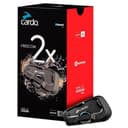
Cardo Freecom 2X

Cardo Freecom 2X

The two-rider Cardo, and the cheapest one that still gets JBL speakers. Cardo publishes a Bluetooth intercom for up to 2 riders at up to 800 m (0.5 mi), 40 mm Sound by JBL drivers, FM radio with presets and a 2-year warranty. It is built for a rider and a pillion or one regular riding partner, and it is honest about being nothing more than that.

Best for a rider and pillion
$178.47 · View on Amazon

$254.9530% off

Price as of September 4, 2026. #ad How we’re funded

7
Cardo Spirit HD

Cardo Spirit HD

Cardo's budget unit with the bigger drivers. The published spec is a two-rider Bluetooth intercom at up to 600 m (0.4 mi), 40 mm HD speakers and a built-in FM radio with six presets. Note what Cardo does NOT say here: the speakers are 40 mm HD, not Sound by JBL — the JBL branding starts at the Freecom, and this is where the range steps down.

Best budget Cardo
$161.96 · View on Amazon

$179.9510% off

Price as of September 4, 2026. #ad How we’re funded

8
Cardo Spirit

Cardo Spirit

The cheapest way to own a Cardo, and the point at which the compromises become visible on the spec sheet rather than hidden in the tuning. Cardo publishes a two-rider Bluetooth intercom at up to 400 m (0.25 mi) with 32 mm speakers — the only unit in the range under 40 mm. It exists for a rider who wants navigation prompts and music in a helmet, from a brand that will still honor a 2-year warranty.

Cheapest way into the brand
$98.95 · View on Amazon

$109.9510% off

Price as of September 4, 2026. #ad How we’re funded

The picks in full

#1Best overall

Cardo Packtalk Neo

The cheapest unit on Cardo's current mesh network, and it is on exactly the same network as the most expensive one. Cardo publishes 2nd Generation DMC, up to 31 riders, 1.6 km (1 mi) unit-to-unit, 40 mm Sound by JBL speakers, 13 hours of talk time, IP67 and Bluetooth 5.2 for the Neo and the Edge alike. What you give up is the magnetic Air Mount, the ability to charge while riding, and one year of warranty.

Strengths

  • 2nd Generation DMC — the same network, range and 31-rider group size as the Edge and Pro
  • 40 mm Sound by JBL speakers and the same 13 h talk time as the flagships
  • IP67 waterproof, Bluetooth 5.2, and 2 h of talk from a 20-minute charge

Trade-offs

  • Clickable mount instead of the Edge's magnetic Air Mount
  • Cardo says the Neo does not support charging while you ride — a real limit on long days
  • 2-year warranty against the Edge's 3
Safety standardCheck current listing
ConstructionIP67-rated, 40 mm Sound by JBL speakers, clickable mount
Key feature2nd Gen DMC mesh, 31 riders, 1 mi unit-to-unit
Fit / sizingUniversal helmet mount
Best forGroup riders who want Cardo's mesh without paying for the Air Mount

Specs and certification read from the manufacturer and retailer listing, on August 31, 2026. “Check current listing” means the maker doesn’t publish that figure — we won’t guess it.

#2Best for daily riders

Cardo Packtalk Edge

The intercom most serious riders point to: Cardo's second-gen Dynamic Mesh (DMC) self-heals as riders drop in and out, JBL speakers sound excellent, and the magnetic Air Mount is the best in the class. The premium pick for group touring.

Strengths

  • Dynamic Mesh (DMC) self-heals across a moving group
  • JBL 40mm speakers — best-in-class audio
  • Magnetic Air Mount and over-the-air updates

Trade-offs

  • Premium price, especially as a pair
  • Mesh only shines when others also run Cardo/DMC
Safety standardCheck current listing
ConstructionIP67-rated, JBL 40mm speakers
Key featureDynamic Mesh (DMC) + JBL audio
Fit / sizingUniversal helmet mount
Best forGroup tourers who want the most reliable mesh network

Specs and certification read from the manufacturer and retailer listing, on July 21, 2026. “Check current listing” means the maker doesn’t publish that figure — we won’t guess it.

#3Most capable

Cardo Packtalk Pro

The top of Cardo's range, and the only unit here with crash detection. Cardo publishes 45 mm JBL speakers against the Edge's 40 mm, plus auto on/off — on the same 2nd Generation DMC network, the same 1.6 km unit-to-unit range, the same 13 hours and the same IP67 rating as the Edge. Buy it for the sensor and the bigger drivers, not for a better network.

Strengths

  • 45 mm Sound by JBL speakers — the largest in the range
  • Crash detection built for on-road motorcycle riding, plus auto on/off
  • 2nd Generation DMC, up to 31 riders, IP67, Air Mount and a 3-year warranty

Trade-offs

  • Cardo's own comparison shows the same network, range, battery and IP rating as the cheaper Edge
  • Crash detection needs the unit, a connected phone and cloud data coverage to work at all
  • Cardo publishes crash detection for selected regions and on-road/tarmac scenarios only
Safety standardCheck current listing
ConstructionIP67-rated, 45 mm Sound by JBL speakers, magnetic Air Mount
Key feature2nd Gen DMC mesh + crash detection
Fit / sizingUniversal helmet mount
Best forSolo and long-distance riders who want crash detection and the largest speakers Cardo fits

Specs and certification read from the manufacturer and retailer listing, on August 31, 2026. “Check current listing” means the maker doesn’t publish that figure — we won’t guess it.

#4Best for Shoei Gen 3 helmets

Cardo Packtalk-S for Shoei Gen 3

A Packtalk built into the shape of one helmet family rather than clamped onto it. Cardo states it fits the Shoei Neotec 3, GT-Air 3 and J-Cruise 3 only, and publishes the same 2nd Generation DMC, 31 riders, 1.6 km unit-to-unit range, 40 mm Sound by JBL audio, Bluetooth 5.2, IP67 and 3-year warranty as the universal units. If you already own one of those three helmets, this is the tidiest way to add mesh.

Strengths

  • Purpose-fit for the Shoei Gen 3 helmets — no clamp hanging off the shell
  • Same 2nd Generation DMC network, 31-rider group and 1.6 km unit-to-unit range as the Edge
  • 40 mm Sound by JBL audio, Bluetooth 5.2, IP67 and a 3-year warranty

Trade-offs

  • Cardo states it is compatible with those three Shoei helmets ONLY — it does not move to another lid
  • Costs more than the universal Neo that runs the identical network
  • Ties the electronics to a helmet that will eventually be retired after a crash
Safety standardCheck current listing
ConstructionIP67-rated, 40 mm Sound by JBL audio, Shoei Gen 3 integration
Key feature2nd Gen DMC mesh, Shoei Neotec 3 / GT-Air 3 / J-Cruise 3 only
Fit / sizingFits Shoei Neotec 3, GT-Air 3 and J-Cruise 3 helmets only
Best forOwners of a Shoei Neotec 3, GT-Air 3 or J-Cruise 3

Specs and certification read from the manufacturer and retailer listing, on August 31, 2026. “Check current listing” means the maker doesn’t publish that figure — we won’t guess it.

#5Best four-rider Bluetooth

Cardo Freecom 4X

A Bluetooth intercom (not mesh) for up to four riders, with the same JBL speakers as the flagship. The right Cardo for a rider-plus-pillion or a small fixed group who don't need self-healing mesh.

Strengths

  • JBL speakers at a mid price
  • Four-way Bluetooth intercom, ideal for pillion use
  • Natural voice operation and OTA updates

Trade-offs

  • Bluetooth, not mesh — connections don't self-heal like DMC
  • Range and group stability trail the mesh flagship
Safety standardCheck current listing
ConstructionIP67-rated, JBL speakers
Key feature4-rider Bluetooth + JBL audio
Fit / sizingUniversal helmet mount
Best forRider-and-pillion or a small, fixed riding group

Specs and certification read from the manufacturer and retailer listing, on August 31, 2026. “Check current listing” means the maker doesn’t publish that figure — we won’t guess it.

#6Best for a rider and pillion

Cardo Freecom 2X

The two-rider Cardo, and the cheapest one that still gets JBL speakers. Cardo publishes a Bluetooth intercom for up to 2 riders at up to 800 m (0.5 mi), 40 mm Sound by JBL drivers, FM radio with presets and a 2-year warranty. It is built for a rider and a pillion or one regular riding partner, and it is honest about being nothing more than that.

Strengths

  • 40 mm Sound by JBL speakers at the bottom of the JBL range
  • Cardo publishes up to 800 m (0.5 mi) between two units
  • FM radio, USB-C fast charging and a full charge in about 2 hours

Trade-offs

  • Two riders maximum — a third person cannot join
  • Cardo does not list natural voice operation for the 2X the way it does for the 4X
  • Waterproof, but Cardo publishes no IP rating for the Freecom family
Safety standardCheck current listing
ConstructionWaterproof (no IP rating published), 40 mm Sound by JBL speakers
Key feature2-rider Bluetooth, up to 800 m
Fit / sizingUniversal helmet mount
Best forA rider and pillion, or two friends who always ride together

Specs and certification read from the manufacturer and retailer listing, on August 31, 2026. “Check current listing” means the maker doesn’t publish that figure — we won’t guess it.

#7Best budget Cardo

Cardo Spirit HD

Cardo's budget unit with the bigger drivers. The published spec is a two-rider Bluetooth intercom at up to 600 m (0.4 mi), 40 mm HD speakers and a built-in FM radio with six presets. Note what Cardo does NOT say here: the speakers are 40 mm HD, not Sound by JBL — the JBL branding starts at the Freecom, and this is where the range steps down.

Strengths

  • 40 mm speakers — the same diameter as the Freecom, at a much lower price
  • Built-in FM radio with six presets and a 2-year warranty
  • Fast charging: 2 hours of talk time after 20 minutes on the cable

Trade-offs

  • Cardo publishes 40 mm HD speakers, not Sound by JBL — the audio tuning is the cut
  • Two riders maximum, at up to 600 m (0.4 mi)
  • Waterproof, but Cardo publishes no IP rating for the Spirit family
Safety standardCheck current listing
ConstructionWaterproof (no IP rating published), 40 mm HD speakers
Key feature2-rider Bluetooth, 40 mm HD speakers, FM radio
Fit / sizingUniversal helmet mount, clamp and cradle
Best forRiders who want a dependable Cardo for music, navigation and the occasional word

Specs and certification read from the manufacturer and retailer listing, on August 31, 2026. “Check current listing” means the maker doesn’t publish that figure — we won’t guess it.

#8Cheapest way into the brand

Cardo Spirit

The cheapest way to own a Cardo, and the point at which the compromises become visible on the spec sheet rather than hidden in the tuning. Cardo publishes a two-rider Bluetooth intercom at up to 400 m (0.25 mi) with 32 mm speakers — the only unit in the range under 40 mm. It exists for a rider who wants navigation prompts and music in a helmet, from a brand that will still honor a 2-year warranty.

Strengths

  • The lowest-priced unit Cardo sells, with the same 2-year warranty as the Freecom
  • Fast charging — 2 hours of talk from a 20-minute charge, full charge in about 2 hours
  • Cardo's app, firmware updates and support, which no-name budget units do not have

Trade-offs

  • 32 mm speakers — the smallest in the range, and wind noise is what eats small drivers
  • Cardo publishes up to 400 m (0.25 mi) between two units, the shortest range here
  • Two riders maximum, and no FM radio listed where the Spirit HD has one
Safety standardCheck current listing
ConstructionWaterproof (no IP rating published), 32 mm speakers
Key feature2-rider Bluetooth, up to 400 m
Fit / sizingUniversal helmet mount, clamp and cradle
Best forSolo riders who mainly want navigation and music, on the smallest possible budget

Specs and certification read from the manufacturer and retailer listing, on August 31, 2026. “Check current listing” means the maker doesn’t publish that figure — we won’t guess it.

How to read a Cardo model name

Cardo’s naming is more honest than most, once you know the rule. The family name is the network: Packtalk units run Dynamic Mesh Communication, Freecom and Spirit units run Bluetooth. The number in a Freecom name is the rider count — a Freecom 4X connects four riders, a Freecom 2X connects two. And the suffix, where there is one, is a fitment: the “-S” units are built for one specific helmet family rather than clamped to any shell.

FamilyModelsNetworkRiders (Cardo, published)
PacktalkPro, Edge, Neo, Packtalk-S2nd Generation DMC mesh + BluetoothUp to 31
Freecom4X, 2XBluetooth intercom4 and 2
SpiritSpirit HD, SpiritBluetooth intercom2

That table is the whole shopping decision in miniature. If you ride with three other people or fewer and the group never changes shape, a Freecom does the job for a fraction of the money. If you ride in a group that spreads out, gains people and loses them, the mesh in a Packtalk is the only thing on this page that handles it, and our mesh vs Bluetooth explainer covers exactly why a Bluetooth chain breaks where a mesh network re-routes.

The number that changed this month: 15 riders became 31

If you have researched Cardo before, you will have read that DMC connects up to 15 riders. That number is now out of date, and the change is recent enough that Cardo’s own site has not finished catching up with it.

On 17 August 2026 Cardo announced Mesh Boost, which takes a DMC group from up to 15 riders to “up to 31 riders in a true DMC group.” It is an over-the-air software update, delivered through the Cardo Connect app for “supported 2nd generation DMC devices, including PACKTALK PRO, EDGE and NEO.” The Packtalk Edge firmware release notes carry the same line at version 5.4 — “We’ve extended DMC group size to 31 riders” — and add that Mesh Boost groups can include legacy DMC units (Packtalk Bold, Slim and Black) “with some limitations.”

Three consequences for anyone shopping right now. First, this is firmware, not hardware: a Packtalk Neo bought two years ago gets the same 31-rider group as one bought today, once it is updated. There is no newer box to hunt for. Second, it does not reach the Freecom or Spirit families — they are Bluetooth units and there is no mesh to boost. Third, the old number is still in circulation: Cardo’s own Edge-versus-Pro comparison table still shows “Max riders: 15”, and the retail listing for the Packtalk Neo still says “Connect Up to 15 Riders” in its title. Both were written before Mesh Boost. We have gone with the figure Cardo publishes on the product pages and in the release notes, because that is the one describing the software the unit will actually be running.

What the money buys inside the Packtalk range

This is the part worth being precise about, because the price gaps are large and the specification gaps are not. Here is what Cardo publishes for the three universal Packtalk units, from its own product pages and its own Edge-versus-Pro comparison:

SpecPacktalk NeoPacktalk EdgePacktalk Pro
Network2nd Gen DMC2nd Gen DMC2nd Gen DMC
RidersUp to 31Up to 31Up to 31
Unit-to-unit range1.6 km / 1 mi1.6 km / 1 mi1.6 km / 1 mi
Group range8 km / 5 mi8 km / 5 mi8 km / 5 mi
Talk time13 h13 h13 h
WaterproofIP67IP67IP67
Bluetooth5.25.25.2
Speakers40 mm JBL40 mm JBL45 mm JBL
MountClickableMagnetic Air MountMagnetic Air Mount
Charge while ridingNoYesYes
Crash detectionNoNoYes
Warranty2 years3 years3 years

Nine of those thirteen rows are identical across all three units. The four that are not are the entire argument for spending more: bigger drivers, a magnetic mount, charging while you ride, an extra year of warranty and one sensor. Those are real differences and for some riders they are worth every cent — but none of them changes who you can talk to, how far away they can be, or how long the unit lasts on a charge.

Which is why the Neo is ranked first here. It is the cheapest way onto Cardo’s current mesh network and it arrives on that network with nothing important missing. The Edge is ranked second rather than first because its two genuine advantages — the Air Mount and charge-while-riding — are worth most to the rider who is on the bike constantly. Cardo states plainly that “the Neo does not support charge-while-riding,” and on a 500-mile day with navigation, music and intercom all running against a 13-hour battery, that is not a footnote. If you tour long distances or commute daily, buy the Edge. If you ride weekends, the Neo is the same intercom for less.

Crash detection, and what Cardo actually publishes about it

The Packtalk Pro is the only unit here with crash detection, and it is the feature most likely to be oversold by someone else, so here is Cardo’s own framing of it. Cardo describes a “crash detection sensor made especially for on-road motorcycle riders” that “senses what your head feels” and is “designed to detect events at a severity that would potentially require medical attention.”

And here are the limits Cardo publishes in the same place, which matter just as much:

  • It requires the unit, phone and cloud to work in concert, and cannot function without a phone connected to a data service. No signal, no alert.
  • It is currently available in selected regions only, with Cardo linking to a supported-countries list rather than claiming global coverage.
  • It covers on-road / tarmac scenarios only. If your riding is mostly trails and fire roads, this is not the feature you are buying it for.

We have not triggered this system and would not know how to test it responsibly, so we are reporting what Cardo publishes rather than vouching for how it performs. Treat it as a useful extra on a unit you already wanted for its speakers — not as a substitute for anyone knowing your route. If a rider-down alert is genuinely your priority, the gear that reduces the injury in the first place is the better spend: our airbag vest roundup covers systems built for exactly that job.

Where the range actually stops

Range is the most misread specification in this category, and Cardo publishes two different figures for the same unit, both of them true and measuring different things. The unit-to-unit range is the link between any two headsets. The group range is how far a chain of riders can span when the units relay through each other. On a Packtalk those are 1 mile and 5 miles respectively. The number that decides whether you can hear the rider behind you is the first one.

ModelIntercomRidersUnit-to-unitGroup range
Packtalk Pro / Edge / Neo2nd Gen DMC meshUp to 311.6 km (1 mi)8 km (5 mi)
Packtalk-S (Shoei Gen 3)2nd Gen DMC meshUp to 311.6 km (1 mi)Not published separately
Freecom 4XBluetooth41.2 km (0.75 mi)3.7 mi
Freecom 2XBluetooth2800 m (0.5 mi)0.5 mi — same figure
Spirit HDBluetooth2600 m (0.4 mi)
SpiritBluetooth2400 m (0.25 mi)

The Freecom 2X row is the instructive one. Cardo publishes the same 0.5-mile figure for both columns, and the reason is arithmetic rather than marketing: with only two units there is nothing in the middle to relay through, so the group range is the unit-to-unit range. That is also the honest version of what a two-rider intercom is for.

Every one of these figures is measured in open, line-of-sight terrain. A bend, a ridge or a line of trucks between two riders cuts them hard, and no manufacturer’s number survives contact with a canyon road. Treat them as a ceiling and a way of ranking models against each other, never as a promise.

The JBL line, and where Cardo stops crossing it

Speakers are the specification riders under-weight and then complain about, because wind noise at highway speed is what eats a small driver. Cardo’s range has a clear line through it that is easy to miss:

  • 45 mm Sound by JBL — Packtalk Pro only. The largest drivers Cardo fits.
  • 40 mm Sound by JBL — Packtalk Edge, Packtalk Neo, Packtalk-S, Freecom 4X, Freecom 2X. A Freecom 2X gets the same branded drivers as a flagship Packtalk.
  • 40 mm HD, no JBL branding — Spirit HD. Cardo describes the diameter but does not apply “Sound by JBL” to it.
  • 32 mm — Spirit. The only unit in the range below 40 mm.

So the audio cliff is not where the price cliff is. Moving from a Packtalk to a Freecom costs you the mesh network and 0.25 miles of reach but keeps the branded 40 mm drivers. Moving from a Freecom to a Spirit is where the audio itself steps down. If sound quality is what you care about and budget is tight, the Freecom 2X is a more sensible buy than the Spirit HD even though both are two-rider Bluetooth units.

Battery: the spec that does not scale with price

Cardo publishes 13 hours of talk time across the Packtalk and Freecom families alike, with up to 10 days on standby and a full charge in about 2 hours. Every unit here also does the same fast charge: 2 hours of talk time after 20 minutes on the cable, which in practice means a coffee stop refills most of a day.

That flatness is a genuine difference between the two big brands. Sena uses battery as a reason to move up its range — its 60 Series publishes considerably longer talk time than its 50 Series, as our guide to the Sena range sets out. Cardo does not. Buying up the Cardo range gets you speakers, a mount and a sensor, and the same 13 hours either way. The one place battery does enter the decision is charge-while-riding, which the Neo does not support and the Edge and Pro do — a matter of when you can top up rather than how long it lasts.

The Shoei option most riders do not know exists

If your helmet is a Shoei Neotec 3, GT-Air 3 or J-Cruise 3, Cardo makes a version of the Packtalk designed into that helmet rather than clamped onto it. Cardo publishes the same 2nd Generation DMC, the same 31-rider group, the same 1.6 km unit-to-unit range, 40 mm Sound by JBL audio, Bluetooth 5.2, IP67 and a three-year warranty — the universal Packtalk experience without a module hanging off the shell.

Two of those helmets are already picks on this site: the Neotec 3 leads our modular helmet roundup and the GT-Air 3 our touring helmet roundup. If you own either one, this is the tidiest install available to you and the reason it is ranked here rather than buried in a footnote.
Cardo Packtalk-S for Shoei Gen 3

Shoei Gen 3 pick — mesh

Cardo Packtalk-S for Shoei Gen 3

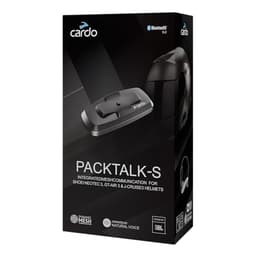
A Packtalk built into the shape of one helmet family rather than clamped onto it. Cardo states it fits the Shoei Neotec 3, GT-Air 3 and J-Cruise 3 only, and publishes the same 2nd Generation DMC, 31 riders, 1.6 km unit-to-unit range, 40 mm Sound by JBL audio, Bluetooth 5.2, IP67 and 3-year warranty as the universal units. If you already own one of those three helmets, this is the tidiest way to add mesh.

See the modular helmets it fits
$377.96 · View on Amazon

$419.9510% off

Price as of September 4, 2026. #ad How we’re funded

The trade is the one every integrated system carries: the electronics and the helmet share a fate. Cardo states the Packtalk-S is compatible with those three helmets only, so it does not move to your next lid, and any helmet is finished after a significant impact — our guide on when to replace a motorcycle helmet explains why. A universal Neo costs less and follows you between helmets for years. Cardo also sells a Bluetooth sibling, the 4X-S, which publishes a four-rider Live Bluetooth Intercom at up to 1.2 km (0.75 mi) with the same 40 mm Sound by JBL audio for the same three helmets — the Freecom-tier answer for a Shoei Gen 3 owner who does not need mesh.

The Cardo units we did not rank, and why

  • Packtalk Custom. Cardo’s pay-per-feature Packtalk, and the subscription model behind it is gone: the Custom’s own firmware release notes at version 4.11 read “We’ve unlocked the Platinum Package on your PACKTALK CUSTOM — no subscription needed,” with refunds for unused time. That is good news for owners. It is not a unit we can rank, because we could not confirm a current listing for it at the retailer we link to on the date we wrote this.
  • Packtalk Outdoor. Cardo files this one under its Outdoor collection and describes it for ski and snowboard use, with a published 15-user network, 1 km between two users, and battery rated at temperatures as low as −20 °C. It is a good product and it is not a motorcycle intercom, so it does not belong on this page.
  • Packtalk Bold, Slim and Black. The legacy DMC generation. Cardo’s own release notes say they can join a Mesh Boost group “with some limitations” rather than joining it outright, and we would not put a new buyer on a network generation that is already being described in terms of what it cannot do.
  • Dual packs. Every unit above is priced and linked as a single. If you already know there are two of you, look for the dual pack of the same model — Cardo sells them for most of the range and they are cheaper than two singles. We rank singles so the prices on this page compare like with like.

Cardo or Sena

The two brands split this category and the honest answer is usually not about hardware. Cardo’s mesh benchmark uses JBL speakers and a magnetic mount; Sena’s uses Harman Kardon — or Bose on its newest unit — and the Jog Dial. Both mesh networks are proprietary and neither talks to the other in mesh mode. Units of different brands can still connect over a standard universal Bluetooth intercom link, but that loses the self-healing behavior that is the entire reason to buy mesh in the first place.

So the practical question is not which brand is better, it is what the people you ride with already own. If your group runs Cardo, buy Cardo. We lay out the full comparison on Cardo vs Sena, put the two flagships head-to-head on Packtalk Edge vs Sena 50S, and compare the mid-tier units on Cardo Freecom 4X vs Sena Spider ST1.

Before you buy

Three things decide whether the unit gets used or ends up in a drawer. First, check the speaker pocket in your helmet before you order — a 45 mm driver needs somewhere to sit, and the answer is never to carve the EPS liner. Our intercom installation guide covers the mounting job and the one rule you must not break. Second, update the firmware the day it arrives, and make sure everyone in your group does the same — the Mesh Boost note above is exactly why, and mixed firmware is the classic cause of a group that paired fine last month. Third, buy the pair if you already know there are two of you.

And if you have not settled on a brand at all yet, our guide to choosing a motorcycle intercom works through network type, speaker fit, mounting and glove-friendly controls without assuming one, and our best motorcycle intercoms roundup ranks across both brands.
Frequently asked questions

Which Cardo intercom should I buy?

Start with one question: does your riding group change shape? If people join, drop back and ride out of range, you want mesh, and the Packtalk Neo is the cheapest unit on Cardo's current mesh network — same 2nd Generation DMC, same 31-rider group, same 1.6 km unit-to-unit range and same 13-hour battery as the flagship. If you ride every day or tour long distances, step up to the Packtalk Edge for the magnetic Air Mount and the ability to charge while riding. If your group is fixed at four or fewer, a Freecom 4X does the job on Bluetooth for much less. If it is just you and a pillion, a Freecom 2X.

How many riders can a Cardo Packtalk connect?

Up to 31, as of Cardo's Mesh Boost update announced on 17 August 2026. DMC groups previously supported up to 15 riders; Mesh Boost is an over-the-air software update delivered through the Cardo Connect app for supported 2nd generation DMC devices, which Cardo lists as the Packtalk Pro, Edge and Neo. Because it is firmware rather than hardware, an older Packtalk gets there by updating. You will still see the 15-rider figure in older material, including Cardo's own Edge-versus-Pro comparison table and some retail listings.

Is the Packtalk Pro worth it over the Edge?

Only for three specific things, because the network is the same. Cardo's own comparison shows both units on 2nd Generation DMC with the same 1.6 km (1 mile) unit-to-unit range, the same 8 km (5 mile) group range, the same 13-hour battery, the same IP67 rating, the same Bluetooth 5.2, the same Air Mount and the same three-year warranty. What the Pro adds is 45 mm JBL speakers instead of 40 mm, crash detection, and auto on/off. If you want the biggest drivers Cardo fits or you ride alone a lot and want the crash sensor, it is a real upgrade. If you want the mesh network, it is not.

What is the difference between the Packtalk Neo and the Packtalk Edge?

The mount, charging and the warranty — not the network. Cardo publishes 2nd Generation DMC, up to 31 riders, 1.6 km unit-to-unit range, 8 km group range, 40 mm Sound by JBL speakers, 13 hours of talk time, IP67 and Bluetooth 5.2 for both. The Edge uses the patented magnetic Air Mount where the Neo uses a clickable cradle, the Edge charges over USB-C while you ride and Cardo states the Neo does not, and the Edge carries a three-year warranty against the Neo's two. For a weekend rider that is a preference; for someone doing 500-mile days it is the reason to pay more.

Do Cardo and Sena intercoms work together?

Not on mesh. Cardo's Dynamic Mesh and Sena's Mesh are proprietary and only network with units of the same brand. The two can still connect over a standard universal Bluetooth intercom link, so a mixed pair can talk, but you lose the self-healing behavior that is the entire reason to buy mesh. If the people you ride with already run one brand, that usually settles the decision on its own.

How long does a Cardo battery last?

Cardo publishes up to 13 hours of continuous talk time across both the Packtalk and Freecom families, with up to 10 days on standby and a full charge in about 2 hours. Every unit also does the same fast charge: 2 hours of talk time after 20 minutes on the cable. Battery is one spec that does not improve as you move up the Cardo range — what changes is that the Edge and Pro can charge while you ride and the Neo cannot.

Are Cardo speakers really JBL?

On most of the range, yes — and there is a clear line worth knowing. Cardo publishes 45 mm Sound by JBL on the Packtalk Pro and 40 mm Sound by JBL on the Packtalk Edge, Packtalk Neo, Packtalk-S, Freecom 4X and Freecom 2X. The Spirit HD is described with 40 mm HD speakers and no JBL branding, and the Spirit drops to 32 mm. So the audio step-down happens between the Freecom and the Spirit, not between the Packtalk and the Freecom.

Does the Cardo crash detection actually call for help?

It sends an emergency notice, and Cardo is specific about what has to be true for that to happen. The system requires the unit, a phone and the cloud to work in concert, so it cannot function without a phone connected to a data service — no signal, no alert. Cardo also states it is currently available in selected regions only and covers on-road/tarmac scenarios only. It is only on the Packtalk Pro. We have not triggered it and are reporting what Cardo publishes rather than vouching for how it performs.

How much do Cardo intercoms cost?

They span a wide band, from the entry Spirit up to the Packtalk Pro, and pricing moves constantly with dual packs and promotions. We do not print a number into this answer — the price on each card above is pulled live from the retailer and time-stamped, which is the only figure worth trusting on a page you might be reading months after it was written.

Sources

  • Cardo — PACKTALK PROCardo's published PACKTALK PRO specs: 2nd Generation DMC, "Connects Up to 31 Riders", range of up to 1.6 km / 1 mi, 45 mm JBL speakers, IP67 waterproof, patented magnetic Air Mount, 3-year warranty, and crash detection that Cardo states requires the unit, a phone and cloud data coverage and covers on-road/tarmac scenarios in selected regions only (accessed August 31, 2026)
  • Cardo — PACKTALK EDGECardo's published PACKTALK EDGE specs: 2nd Generation Dynamic Mesh, "Connect up to 31 riders", range of up to 1.6 km / 1 mi, 40 mm Sound by JBL speakers, IP67, Bluetooth 5.2, patented magnetic Air Mount, 2 hours of talk time after 20 minutes of charge, 3-year warranty (accessed August 31, 2026)
  • Cardo — PACKTALK NEOCardo's published PACKTALK NEO specs: 2nd Generation DMC, "Connect up to 31 riders", range of up to 1.6 km / 1 mi, 40 mm Sound by JBL speakers, IP67, Bluetooth 5.2, clickable mount rather than the Edge's Air Mount, 2 hours of talk time after 20 minutes of USB-C charging, 2-year warranty (accessed August 31, 2026)
  • Cardo — Packtalk Neo vs. Edge: What's the Difference?Cardo's own Neo-versus-Edge article: identical 2nd Generation DMC, "Unit-to-unit range reaches up to 1.6km, and the group range extends to 8km", 40 mm JBL speakers "tuned identically", "13 hours of talk time per charge" and "up to 10 days on standby" for both; the differences are the Air Mount versus the clickable mount, that "The Neo does not support charge-while-riding", and a 3-year versus 2-year warranty (accessed August 31, 2026)
  • Cardo — PACKTALK EDGE vs PACKTALK PRO: Which to Buy?Cardo's own Edge-versus-Pro comparison table: identical 2nd Generation DMC, unit-to-unit range 1.6 km (1 mile), group range 8 km (5 miles), Air Mount, 13-hour battery, IP67, Bluetooth 5.2 and 3-year warranty; the PRO adds 45 mm JBL speakers (against 40 mm), crash detection and auto on/off, while the EDGE is Edgephones compatible. The table's "Max riders" row still reads 15 — the pre-Mesh-Boost figure (accessed August 31, 2026)
  • Cardo — Mesh Boost: More Riders. More Adventures.Cardo's own Mesh Boost announcement, published 17 August 2026: DMC groups previously supported up to 15 riders and now support "Up to 31 riders in a true DMC group", delivered as an over-the-air software update through the Cardo Connect app for "supported 2nd generation DMC devices, including PACKTALK PRO, EDGE and NEO" — firmware, not new hardware (accessed August 31, 2026)
  • Cardo — Packtalk Edge release notesCardo's own Packtalk Edge firmware release notes, version 5.4: "We've extended DMC group size to 31 riders" and "Mesh Boost groups can include legacy DMC units (Packtalk Bold/Slim/Black) with some limitations" (accessed August 31, 2026)
  • Cardo — PACKTALK-S for SHOEI Gen 3 helmetsCardo's published PACKTALK-S specs: compatible with "SHOEI NEOTEC 3, GT-AIR 3, and J-CRUISE 3 helmets only", 2nd Generation Dynamic Mesh Communication, "Connects up to 31 riders", range of up to 1.6 km / 1 mi between two units, 40 mm Sound by JBL audio system, Bluetooth 5.2, IP67 waterproof, 3-year warranty (accessed August 31, 2026)
  • Cardo — 4X-S for SHOEI Gen 3 helmetsCardo's published 4X-S specs: fits "SHOEI NEOTEC 3, GT-AIR 3, and J-CRUISE 3 helmets only", Live Bluetooth Intercom rather than DMC mesh, "Connects up to 4 riders", range of up to 1.2 km / 0.75 mi, 40 mm Sound by JBL audio system, 2-year warranty (accessed August 31, 2026)
  • Cardo — FREECOM 4XCardo's published FREECOM 4X specs: Bluetooth intercom that "Connects up to 4 riders", range of up to 1.2 km / 0.75 mi, 40 mm speakers sound by JBL, natural voice operation, full charge in about 2 hours with 2 hours of talk time after 20 minutes, 2-year warranty. Cardo states "All Cardo units are waterproof" but publishes no IP rating for the Freecom family (accessed August 31, 2026)
  • Cardo — FREECOM 2XCardo's published FREECOM 2X specs: Bluetooth intercom that "Connects Up to 2 Riders", range of up to 800 m / 0.5 mi, 40 mm Sound by JBL speakers, built-in FM radio, full charge within 2 hours, 2-year warranty. No IP rating published, and natural voice operation is not listed for this model (accessed August 31, 2026)
  • Cardo — SPIRIT HDCardo's published SPIRIT HD specs: Bluetooth headset that "Connect up to 2 riders", range of up to 600 m / 0.4 mi, 40 mm HD speakers — described without the "Sound by JBL" branding Cardo applies from the Freecom up — built-in FM radio with 6 channel presets, clamp and cradle mount, full charge within 2 hours, 2-year warranty (accessed August 31, 2026)
  • Cardo — SPIRITCardo's published SPIRIT specs: Bluetooth headset that "Connects up to 2 riders", range of up to 400 m / 0.25 mi, 32 mm speakers — the only unit in Cardo's range below 40 mm — clamp and cradle mount, full charge within 2 hours, 2-year warranty (accessed August 31, 2026)
  • Cardo — Packtalk Custom release notesCardo's own Packtalk Custom firmware release notes, version 4.11: "You're Getting an Upgrade — For Free! We've unlocked the Platinum Package on your PACKTALK CUSTOM — no subscription needed" — the primary record that Cardo ended the Custom's pay-per-feature subscription (accessed August 31, 2026)
  • Cardo — Cardo Packtalk vs. Freecom: The DifferencesCardo's own Packtalk-versus-Freecom article: the Freecom family is Bluetooth for "two to four riders" while Packtalk uses Dynamic Mesh Communication; range figures of one mile rider-to-rider and five miles for the group on the Packtalk Edge/Custom/Neo, 0.75 mile and 3.7 miles on the Freecom 4X, and 0.5 mile for both figures on the Freecom 2X. Both families share "40mm JBL speakers" and "up to 13 hours of continuous talk time", charging in "two hours" (accessed August 31, 2026)

Keep reading

More in Comms