Apex & Armor

Cardo Packtalk Alternatives

The Packtalk is the intercom group tourers point to, and it earns that. But read Cardo's own spec pages and the best alternative to an expensive Packtalk turns out to be a cheaper Packtalk — so this page sorts the options by the reason you are looking.

By Stephen V.Last updated How we research

First, what the Packtalk is known for, because an alternatives page that starts by running down the original is useless. Cardo’s Packtalk line runs 2nd Generation Dynamic Mesh Communication — a self-healing network that reorganizes itself as riders drop out of range and rejoin, rather than dropping the call and asking someone to re-pair. Cardo publishes up to 31 riders in a DMC group, 1.6 km (1 mile) unit-to-unit and 8 km (5 miles) across a group, 40 mm Sound by JBL speakers, IP67 waterproofing, Bluetooth 5.2, natural voice operation, over-the-air firmware updates and a three-year warranty. The magnetic Air Mount on the Edge and Pro is the best mount in the class. None of that is marketing we are repeating — it is Cardo’s own published specification, and it is why the Packtalk is the default recommendation in group-touring circles.

People still go looking for an alternative, and in our reading they do it for one of five reasons: the price, the brand their group already runs, the fact that they never ride in a group at all, a preference for Sena’s controls, or a budget that simply does not reach. Those are five different questions with five different answers, so this page is ordered by reason rather than by rank.

And the first answer is the one nobody leads with. Cardo publishes the SAME network, the same range, the same speakers, the same battery life, the same IP rating and the same Bluetooth version for the Packtalk Neo as for the Packtalk Edge. Cardo’s own Neo-versus-Edge article states it plainly: identical 2nd Generation DMC, “Unit-to-unit range reaches up to 1.6km, and the group range extends to 8km”, 40 mm JBL speakers “tuned identically”, and “13 hours of talk time per charge” on both. What the Neo gives up is the Air Mount, charge-while-riding, and one year of warranty. If price is why you are here, the cheapest alternative to a Packtalk is a Packtalk.

How this is funded: we earn a commission if you buy through our links, at no extra cost to you. It never changes which gear we recommend, and we’ll tell you plainly when to skip a pick. Full disclosure.

Quick picks

Ranked on certification, spec and buyer fit. Select a row to jump to the full write-up. We haven’t crash-tested this gear — here is exactly what we do instead.

#GearBest forPrice
1
Cardo Packtalk Neo

Cardo Packtalk Neo

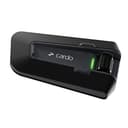
The cheapest unit on Cardo's current mesh network, and it is on exactly the same network as the most expensive one. Cardo publishes 2nd Generation DMC, up to 31 riders, 1.6 km (1 mi) unit-to-unit, 40 mm Sound by JBL speakers, 13 hours of talk time, IP67 and Bluetooth 5.2 for the Neo and the Edge alike. What you give up is the magnetic Air Mount, the ability to charge while riding, and one year of warranty.

Same mesh network, less money
$323.96 · View on Amazon

$359.9510% off

Price as of November 12, 2026. #ad How we’re funded

2
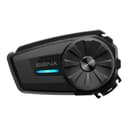
Sena 50S

Sena 50S

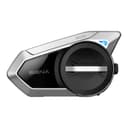
Sena's mesh benchmark, with Harman Kardon speakers and the signature Jog Dial control that's easy to use in gloves. Sena now publishes Mesh Intercom 3.0 for it — a firmware generation, not new hardware. The main rival to Cardo's Packtalk Edge, and the pick if you prefer Sena's ecosystem and controls.

Best like-for-like in the other brand
$323.27 · View on Amazon

$379.0015% off

Price as of November 12, 2026. #ad How we’re funded

3
Sena Spider ST1

Sena Spider ST1

The value way into Sena Mesh: Open Mesh and Bluetooth in a simpler unit at a lower price than the 50S. If you want mesh's self-healing group audio without the flagship features, this is the entry point.

Cheapest real mesh
$239.00 · View on Amazon

Price as of November 12, 2026. #ad How we’re funded

4
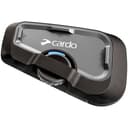
Cardo Freecom 4X

Cardo Freecom 4X

A Bluetooth intercom (not mesh) for up to four riders, with the same 40 mm JBL speakers as the Packtalk Edge. The right Cardo for a rider-plus-pillion or a small fixed group who don't need self-healing mesh.

Best if you never ride in a big group
$279.80 · View on Amazon

$314.9511% off

Price as of November 12, 2026. #ad How we’re funded

5
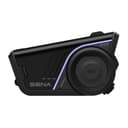
Sena 60S EVO

Sena 60S EVO

Sena's current top tier, and the first of its units tuned by Bose rather than Harman Kardon. Mesh Intercom 3.0 plus the cellular Wave intercom, IPX7 waterproofing and the longest talk time Sena publishes anywhere in the range. It is also the most expensive way to join the same mesh network a 50S joins.

The alternative that is a step up
$459.00 · View on Amazon

Price as of November 12, 2026. #ad How we’re funded

6
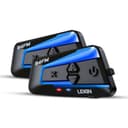
Lexin B4FM

Lexin B4FM

The budget group intercom that punches above its price: up to four riders, FM radio, and music sharing, for a fraction of a premium unit. The value pick for casual group riders.

Budget pick — and not mesh
$149.99 · View on Amazon

Price as of November 12, 2026. #ad How we’re funded

The picks in full

#1Same mesh network, less money

Cardo Packtalk Neo

The cheapest unit on Cardo's current mesh network, and it is on exactly the same network as the most expensive one. Cardo publishes 2nd Generation DMC, up to 31 riders, 1.6 km (1 mi) unit-to-unit, 40 mm Sound by JBL speakers, 13 hours of talk time, IP67 and Bluetooth 5.2 for the Neo and the Edge alike. What you give up is the magnetic Air Mount, the ability to charge while riding, and one year of warranty.

Strengths

  • 2nd Generation DMC — the same network, range and 31-rider group size as the Edge and Pro
  • 40 mm Sound by JBL speakers and the same 13 h talk time as the flagships
  • IP67 waterproof, Bluetooth 5.2, and 2 h of talk from a 20-minute charge

Trade-offs

  • Clickable mount instead of the Edge's magnetic Air Mount
  • Cardo says the Neo does not support charging while you ride — a real limit on long days
  • 2-year warranty against the Edge's 3
Safety standardCheck current listing
ConstructionIP67-rated, 40 mm Sound by JBL speakers, clickable mount
Key feature2nd Gen DMC mesh, 31 riders, 1 mi unit-to-unit
Fit / sizingUniversal helmet mount
Best forGroup riders who want Cardo's mesh without paying for the Air Mount

Specs and certification read from the manufacturer and retailer listing, on August 31, 2026. “Check current listing” means the maker doesn’t publish that figure — we won’t guess it.

#2Best like-for-like in the other brand

Sena 50S

Sena's mesh benchmark, with Harman Kardon speakers and the signature Jog Dial control that's easy to use in gloves. Sena now publishes Mesh Intercom 3.0 for it — a firmware generation, not new hardware. The main rival to Cardo's Packtalk Edge, and the pick if you prefer Sena's ecosystem and controls.

Strengths

  • Mesh Intercom 3.0 with a large, glove-friendly Jog Dial
  • Harman Kardon speakers and mics
  • Sena publishes 13 h mesh / 16 h Bluetooth talk time and a 2.5 h charge

Trade-offs

  • Premium price as a pair
  • Mesh interoperability is best within Sena's own network
  • Previous top tier: Sena's 60 Series sits above it, and Sena announced the 60S EVO on 18 May 2026 as the successor to the 60S — worth pricing the three against each other
Safety standardCheck current listing
ConstructionHarman Kardon 40 mm speakers, Jog Dial
Key featureMesh Intercom 3.0 + Harman Kardon audio
Fit / sizingUniversal helmet mount
Best forRiders in a Sena group who want proven mesh and easy glove controls

Specs and certification read from the manufacturer and retailer listing, on August 31, 2026. “Check current listing” means the maker doesn’t publish that figure — we won’t guess it.

#3Cheapest real mesh

Sena Spider ST1

The value way into Sena Mesh: Open Mesh and Bluetooth in a simpler unit at a lower price than the 50S. If you want mesh's self-healing group audio without the flagship features, this is the entry point.

Strengths

  • Open Mesh + Bluetooth at a mid price
  • Jog Dial control that works in gloves
  • Compatible with other Sena Mesh units

Trade-offs

  • Fewer features and lower-tier audio than the 50S
  • No premium speaker branding
Safety standardCheck current listing
ConstructionJog Dial control, USB-C
Key featureOpen Mesh + Bluetooth
Fit / sizingUniversal helmet mount
Best forRiders who want mesh on a budget

Specs and certification read from the manufacturer and retailer listing, on July 21, 2026. “Check current listing” means the maker doesn’t publish that figure — we won’t guess it.

#4Best if you never ride in a big group

Cardo Freecom 4X

A Bluetooth intercom (not mesh) for up to four riders, with the same 40 mm JBL speakers as the Packtalk Edge. The right Cardo for a rider-plus-pillion or a small fixed group who don't need self-healing mesh.

Strengths

  • JBL speakers at a mid price
  • Four-way Bluetooth intercom, ideal for pillion use
  • Natural voice operation and OTA updates

Trade-offs

  • Bluetooth, not mesh — connections don't self-heal like DMC
  • Range and group stability trail the mesh flagship
Safety standardCheck current listing
ConstructionIP67-rated, JBL speakers
Key feature4-rider Bluetooth + JBL audio
Fit / sizingUniversal helmet mount
Best forRider-and-pillion or a small, fixed riding group

Specs and certification read from the manufacturer and retailer listing, on August 31, 2026. “Check current listing” means the maker doesn’t publish that figure — we won’t guess it.

#5The alternative that is a step up

Sena 60S EVO

Sena's current top tier, and the first of its units tuned by Bose rather than Harman Kardon. Mesh Intercom 3.0 plus the cellular Wave intercom, IPX7 waterproofing and the longest talk time Sena publishes anywhere in the range. It is also the most expensive way to join the same mesh network a 50S joins.

Strengths

  • Mesh Intercom 3.0 and 2.0 plus Wave — Group Mesh up to 24, Open Mesh across 6 channels
  • Sena publishes 27 h Bluetooth / 19 h mesh talk time on a 1.5 h charge
  • IPX7 waterproof rating, magnetic mount and a glove-friendly jog dial

Trade-offs

  • Top-tier price for the same 2 km working distance a 50S publishes
  • Sound by Bose is a tuning claim we cannot verify by ear — we own no units
Safety standardCheck current listing
Construction40 mm speakers tuned by Bose, IPX7, jog dial
Key featureMesh 3.0 + Wave intercom, IPX7
Fit / sizingUniversal helmet mount, dual clamp kits included
Best forRiders who want Sena's newest hardware and will pay top-tier money for it

Specs and certification read from the manufacturer and retailer listing, on August 31, 2026. “Check current listing” means the maker doesn’t publish that figure — we won’t guess it.

#6Budget pick — and not mesh

Lexin B4FM

The budget group intercom that punches above its price: up to four riders, FM radio, and music sharing, for a fraction of a premium unit. The value pick for casual group riders.

Strengths

  • Up to four-rider Bluetooth intercom
  • FM radio and music sharing
  • A quarter the price of a flagship

Trade-offs

  • Bluetooth, not mesh — group calls drop and reconnect
  • Audio and mic quality are budget-tier
Safety standardCheck current listing
ConstructionIP67-rated, FM radio
Key feature4-rider Bluetooth + FM
Fit / sizingUniversal helmet mount
Best forCasual groups who want intercom for the least money

Specs and certification read from the manufacturer and retailer listing, on July 21, 2026. “Check current listing” means the maker doesn’t publish that figure — we won’t guess it.

Start here: which question are you actually asking?

“I want the Packtalk, I just do not want to pay that”

Buy the Packtalk Neo. You join the identical DMC network as every Edge and Pro in your group, at the same published range, with the same 40 mm JBL audio and the same 13-hour battery. The three things you give up are specific and easy to price for yourself: the magnetic Air Mount (the Neo uses a clickable mount), the ability to charge while riding, and the third year of warranty. For a rider who mounts the unit once and leaves it there, the Air Mount is a convenience rather than a capability. Our Packtalk Edge against the Neo comparison walks the full spec table row by row.

“Everyone I ride with runs Sena”

Then the brand decision is already made for you, and it is the single most important thing on this page: Cardo DMC and Sena Mesh do not join each other’s networks. Two riders on different brands can pair over ordinary Bluetooth and talk to each other, but the self-healing group mesh — the entire reason to buy either — only forms within one brand’s ecosystem. Buy whatever your group runs, even if the other brand looks better on paper. Our Cardo vs Sena comparison is the long version of that argument.

“I ride alone, or two-up, and never in a pack”

Then you are paying for mesh you will never use. Mesh exists to hold a moving group together; a solo rider needs music, navigation prompts and calls, and a rider-and-pillion pair needs one reliable link that never drops. Both are Bluetooth jobs. The Freecom 4X carries the same 40 mm JBL speakers as the Packtalk Edge in a Bluetooth unit, which is the cleanest version of this trade in Cardo’s range. Our two-up intercom ranking covers the pair case specifically, and mesh versus Bluetooth explains what the two network types actually do differently.

“I want mesh, for as little as possible”

The Sena Spider ST1 is the cheapest unit we track that runs a real mesh network. Sena publishes Mesh Intercom 3.0 for it, Open Mesh across six channels, Group Mesh up to 24 riders, 40 mm drivers, up to 18 hours of talk time and Bluetooth 5.2 — the network is the flagship’s network, and what you give up is the premium speaker branding and the flagship feature set. It is the honest answer to “cheapest real mesh”, and we rank it against its Cardo counterpart in the Freecom 4X against the Spider ST1.

“Show me something better, not cheaper”

The Sena 60S EVO is the only unit here that is a step up rather than a saving. Sena publishes Mesh Intercom 3.0 and 2.0 plus the cellular Wave intercom, 40 mm speakers tuned by Bose, IPX7 waterproofing and 27 hours of Bluetooth or 19 hours of mesh talk time on a 1.5-hour charge — the longest talk time Sena publishes anywhere. The honest caveat is in its own trade-off list: it joins the same Sena mesh a much cheaper 50S joins, and “Sound by Bose” is a tuning claim we cannot verify by ear, because we own no units. For the flagship-against-flagship version see the Packtalk Pro against the 60S EVO.

Three things to know before you compare the spec sheets

The 31-rider figure arrived by firmware, not by hardware

Cardo’s Mesh Boost announcement of 17 August 2026 raised DMC groups from up to 15 riders to “Up to 31 riders in a true DMC group”, and Cardo states it was delivered as an over-the-air update through the Cardo Connect app for supported 2nd Generation DMC devices — “including PACKTALK PRO, EDGE and NEO”. So the biggest Cardo mesh improvement of the year is not a reason to buy the dearer unit: the cheapest current Packtalk got it too. Worth knowing, because Cardo’s own Edge-versus-Pro comparison table still prints 15 in its “Max riders” row while the body text on the same page says 31.

Cardo and Sena do not publish the same range measurement

Cardo publishes 1.6 km (1 mile) unit-to-unit and 8 km (5 miles) across a group. Sena publishes up to 2 km (1.2 miles) in open terrain for the 50S and the 60S EVO. Those are not the same measurement, and neither company publishes the other’s, so the figures cannot be subtracted from each other — a single number against a group number tells you nothing about which network holds a pack together better. Both are best-case open-terrain claims. Read them as the makers’ published claims, which is how our spec tables label them, and expect less in traffic and terrain.

What nobody in this category publishes

Neither Cardo nor Sena publishes an audio measurement of any kind beyond speaker diameter — no frequency response, no sensitivity, no output. “Sound by JBL”, “Harman Kardon” and “Sound by Bose” are tuning partnerships, and a 40 mm driver is a 40 mm driver across all three. Cardo also publishes no IP rating for the Freecom family at all, stating only that “All Cardo units are waterproof”, where it publishes IP67 for every Packtalk. We do not fill either gap with an opinion: where a figure is not published, our spec tables say “Check current listing”.

Two comparability notes on the cards below

The Lexin is a two-unit pack. Every other price on this page is for a single headset. The Lexin B4FM listing is a two-pack, so its button covers two helmets — which flatters it against single-unit prices and is the main reason it is the budget pick rather than a mid-table one. It is also Bluetooth, not mesh: group calls drop and reconnect instead of self-healing, and that is the capability difference the price reflects.

The Lexin’s rider count has moved. We verified four-rider Bluetooth intercom on a dated visit and that is the figure in our spec table; the current retail listing claims a higher number. We quote what we read and flag the gap rather than restating a listing figure we have not verified against anything else. Lexin publishes no specification page of the kind Cardo and Sena do, which is itself the difference between a budget brand and a flagship one.

If none of these is the answer

There are two cases this page deliberately does not solve. If you want the intercom built into the helmet rather than clamped to it, that is a different purchase with a different lifespan, and a Bluetooth helmet against a separate intercom works through why the electronics usually date before the shell does. And if you are buying your first unit rather than replacing one, start with how to choose a motorcycle intercom instead — the group question comes before the brand question, and getting that order wrong is the most expensive mistake in this category. The full field, across both brands and every tier, is in our best motorcycle intercoms ranking, and the whole Cardo range is laid out in our Cardo lineup ranking.
Frequently asked questions

What is the best Cardo Packtalk alternative?

It depends on why you want one, and for the most common reason — price — the answer is the Cardo Packtalk Neo. Cardo's own Neo-versus-Edge article publishes identical 2nd Generation DMC, identical 1.6 km unit-to-unit and 8 km group range, 40 mm JBL speakers it describes as tuned identically, and 13 hours of talk time on both units. The Neo gives up the magnetic Air Mount, charge-while-riding and one year of warranty. If you are changing brands rather than saving money, the Sena 50S is the closest like-for-like.

Is there a cheaper alternative to the Cardo Packtalk that still uses mesh?

Yes, on both brands. Within Cardo, the Packtalk Neo is the cheapest unit on the same 2nd Generation DMC network. Across to Sena, the Spider ST1 is the cheapest unit we track that runs a real mesh network — Sena publishes Mesh Intercom 3.0, Open Mesh across six channels and Group Mesh up to 24 riders for it. What you give up at that price is the flagship feature set and the premium speaker branding, not the network.

Can a Sena intercom talk to a Cardo Packtalk?

Over ordinary Bluetooth, yes — two riders on different brands can pair and talk. Over mesh, no: Cardo's DMC and Sena's Mesh are separate networks and do not join each other. Since self-healing group mesh is the main reason to buy either flagship, the practical rule is to buy whatever brand your riding group already runs, even when the other brand looks better on a spec sheet.

Does the Packtalk Neo really connect the same number of riders as the Edge?

Yes, and the reason is firmware rather than hardware. Cardo's Mesh Boost announcement of 17 August 2026 raised DMC groups to 'Up to 31 riders in a true DMC group' and states it was delivered as an over-the-air update through the Cardo Connect app for supported 2nd Generation DMC devices 'including PACKTALK PRO, EDGE and NEO'. Cardo's own Edge-versus-Pro comparison table still prints the pre-Mesh-Boost figure of 15 in one row while the body text on the same page says 31.

Do I need mesh at all if I ride alone or two-up?

No. Mesh exists to hold a moving group of riders together as units drop out of range and rejoin. A solo rider needs music, navigation and calls, and a rider-and-pillion pair needs one link that does not drop — both are ordinary Bluetooth jobs. A Bluetooth unit with good speakers, such as Cardo's Freecom 4X with the same 40 mm JBL drivers as the Packtalk Edge, does that for less than a mesh flagship.

Sources

  • Cardo — PACKTALK EDGE — Cardo's published PACKTALK EDGE specs: 2nd Generation Dynamic Mesh, "Connect up to 31 riders", range of up to 1.6 km / 1 mi, 40 mm Sound by JBL speakers, IP67, Bluetooth 5.2, patented magnetic Air Mount, 2 hours of talk time after 20 minutes of charge, 3-year warranty (accessed August 31, 2026)
  • Cardo — PACKTALK NEO — Cardo's published PACKTALK NEO specs: 2nd Generation DMC, "Connect up to 31 riders", range of up to 1.6 km / 1 mi, 40 mm Sound by JBL speakers, IP67, Bluetooth 5.2, clickable mount rather than the Edge's Air Mount, 2 hours of talk time after 20 minutes of USB-C charging, 2-year warranty (accessed August 31, 2026)
  • Cardo — Packtalk Neo vs. Edge: What's the Difference? — Cardo's own Neo-versus-Edge article: identical 2nd Generation DMC, "Unit-to-unit range reaches up to 1.6km, and the group range extends to 8km", 40 mm JBL speakers "tuned identically", "13 hours of talk time per charge" and "up to 10 days on standby" for both; the differences are the Air Mount versus the clickable mount, that "The Neo does not support charge-while-riding", and a 3-year versus 2-year warranty (accessed August 31, 2026)
  • Cardo — Mesh Boost: More Riders. More Adventures. — Cardo's own Mesh Boost announcement, published 17 August 2026: DMC groups previously supported up to 15 riders and now support "Up to 31 riders in a true DMC group", delivered as an over-the-air software update through the Cardo Connect app for "supported 2nd generation DMC devices, including PACKTALK PRO, EDGE and NEO" — firmware, not new hardware (accessed August 31, 2026)
  • Cardo — PACKTALK EDGE vs PACKTALK PRO: Which to Buy? — Cardo's own full spec comparison table, re-read on this date, row by row. IDENTICAL on both units: Communication "2nd Generation DMC"; Unit-to-unit range "1.6km (1 mile)"; Group range "8km (5 miles)"; Mount type "Air Mount"; Battery life "13 hours"; Charge while riding "Yes"; Waterproofing "IP67"; Bluetooth version "5.2"; Voice control "Yes"; OTA firmware updates "Yes"; Cardo Connect app "Yes"; Warranty "3 years". DIFFERENT: Speakers "45mm JBL" (PRO) against "40mm JBL" (EDGE); Crash detection "Yes" against "No"; Auto On/Off "Yes" against "No"; Edgephones compatible "No" (PRO) against "Yes" (EDGE). THE PAGE CONTRADICTS ITSELF ON RIDER COUNT: the Max riders row reads "15" for BOTH units, while the body text on the same page says each unit "connects to groups of up to 31 riders" and the FAQ repeats 31 — the row is the pre-Mesh-Boost figure left in place after Cardo's own 17 August 2026 Mesh Boost announcement raised DMC groups to 31 by firmware. CRASH DETECTION, as Cardo publishes it on this page: it "uses a three-part architecture" in which "the Cardo Connect app on the rider's paired phone processes the sensor data against impact thresholds"; an alert triggers when "an impact is detected that meets the threshold for medical attention"; the system "automatically sends an emergency alert to a designated contact with the rider's current GPS location" and "The alert is sent without the rider needing to take any action"; "The feature requires an active Cardo Connect app connection and a paired smartphone with GPS enabled to function"; "Crash Detection was available in selected countries at launch" with the current region list NOT on this page; and the FAQ notes availability "may change with firmware updates". The page also states the EDGE "does not have the sensor array or cloud integration required for Crash Detection". Cardo prints single-unit prices of $499.95 (PRO) and $439.95 (EDGE) on this page; this site does not quote them in prose because prices come only from the live price layer (accessed November 5, 2026)
  • Cardo — FREECOM 4X — Cardo's published FREECOM 4X specs: Bluetooth intercom that "Connects up to 4 riders", range of up to 1.2 km / 0.75 mi, 40 mm speakers sound by JBL, natural voice operation, full charge in about 2 hours with 2 hours of talk time after 20 minutes, 2-year warranty. Cardo states "All Cardo units are waterproof" but publishes no IP rating for the Freecom family (accessed August 31, 2026)
  • Sena — 50S Motorcycle Mesh Communication System — Sena's published 50S specs: Mesh Intercom 3.0, Group Mesh up to 24 riders, up to 2 km (1.2 miles) working distance in open terrain, 13 h mesh / 16 h Bluetooth talk time, 2.5 h charge, Harman Kardon 40 mm speakers (accessed August 31, 2026)
  • Sena — SPIDER ST1 Motorcycle Mesh Communication System — Sena's published Spider ST1 specs: Mesh Intercom 3.0, Open Mesh across six channels, Group Mesh up to 24 riders, jog-dial control, 40 mm drivers, up to 18 h talk time, Bluetooth 5.2 (accessed August 31, 2026)
  • Sena — 60S EVO Motorcycle Communication Headset — Sena's published 60S EVO specs: Mesh Intercom 3.0 and 2.0 plus Wave, Group Mesh up to 24 participants, 2 km (1.2 mi) range in open terrain, Bluetooth intercom up to 4 participants, 40 mm speakers with Sound by Bose, 27 h Bluetooth / 19 h mesh talk time, 1.5 h charge, IPX7 waterproof (accessed August 31, 2026)

Keep reading

More in Comms