Which question are you actually asking?
“I ride alone or two-up, and mesh is overkill”
This is the most common reason, and the one the category is worst at answering, because mesh is what every comparison is written about. Mesh exists to hold a moving group together — it reorganizes itself as riders drop out of range and rejoin. A solo rider needs music, navigation prompts and phone calls, which is a Bluetooth job. A rider and pillion need one link that never drops, which is also a Bluetooth job.
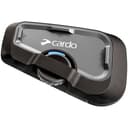
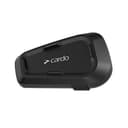
Sena knows this, which is why its own cheapest current unit, the 5S, is a Bluetooth headset rather than a mesh one — Sena publishes a two-rider intercom at up to 700 m for it. So if you were looking at the bottom of Sena’s range anyway, you were never buying mesh. The Cardo Freecom 4X is the cleanest swap: a four-rider Bluetooth intercom carrying the same 40 mm Sound by JBL drivers as the Packtalk Edge, which means you get the flagship’s audio hardware and skip the network you were not going to use. Mesh versus Bluetooth explains what the two network types really do differently, and our two-up intercom ranking covers the pillion case on its own terms.
“I want mesh, I just do not want to pay Sena money for it”
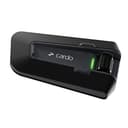
Buy the Packtalk Neo. Cardo publishes 2nd Generation DMC, up to 31 riders in a group, 1.6 km (1 mile) unit-to-unit, 40 mm Sound by JBL speakers, 13 hours of talk time, IP67 and Bluetooth 5.2 for the Neo — and the same figures for the Edge and the Pro above it. The Neo gives up the magnetic Air Mount, the ability to charge while riding, and one year of warranty. It does not give up the network, the range or the speakers.
The thing to understand before you spend anything: Cardo DMC and Sena Mesh do not join each other’s networks. Two riders on different brands can pair over ordinary Bluetooth and talk, but the self-healing group mesh only forms inside one brand’s ecosystem. If the people you ride with run Sena, the correct alternative to a Sena is a different Sena, and we would rather say so than sell you a Cardo. Our Cardo versus Sena comparison is the long version of that argument, and our Sena range guide works out which Sena you would be buying if you stay.
“I want the direct equivalent of a 50S or a 60S”
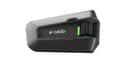
The Packtalk Edge. It is the unit Sena’s flagships are compared against: the same 2nd Generation DMC mesh as the Neo and Pro, 40 mm JBL speakers, IP67, over-the-air updates, a three-year warranty, and the magnetic Air Mount that is the best mount in the class. Cardo now sits one tier above it with the Packtalk Pro — 45 mm JBL drivers and crash detection on the same network — so the Edge is the tier match for a 50S rather than the top of the range. Our Packtalk Edge against the Sena 50S puts the two spec tables side by side, and our Packtalk Pro review covers what the tier above buys.
“I wanted the comms built into the helmet”
Then be clear with yourself about what you are replacing, because this is the one place the alternatives are genuinely thin. Sena is the only brand in our registry that sells complete helmets with the electronics designed in — the Outrush R and the Stryker — and nothing in Cardo’s range is an equivalent product.
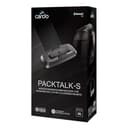
The nearest thing is the Packtalk-S, a Packtalk shaped to fit inside a specific helmet family. Cardo states it fits the Shoei Neotec 3, GT-Air 3 and J-Cruise 3 only, publishes the same 2nd Generation DMC network, 31-rider group and 1.6 km unit-to-unit range as the universal units, and the trade is written on the tin: it does not move to another helmet, and it shares that helmet’s replacement cycle. Two of those three Shoeis are already the top pick on pages we publish — best modular helmets and best touring helmets — so if you own one, this is the tidiest mesh you can fit. If you do not, our Bluetooth helmet ranking is the honest page for you, and it is mostly Sena.
“I want to spend about half”
The Cardo Spirit HD, with one caveat stated plainly: Cardo publishes 40 mm HD speakers for it, not Sound by JBL. The JBL branding starts at the Freecom, and the Spirit is where the audio tuning steps down. What you get for the money is a two-rider Bluetooth intercom at up to 600 m, an FM radio with six presets, fast charging (Cardo publishes two hours of talk from a twenty-minute charge) and a two-year warranty from a brand that updates firmware for years. Cardo publishes no IP rating for the Spirit family, only that it is waterproof, and we record that gap rather than borrowing the Packtalk’s IP67.
“None of this fits my budget”
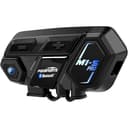
The Fodsports M1-S Pro is the floor: an eight-rider Bluetooth chain with music sharing and FM radio for a fraction of anything above. It is a chain, not a mesh — if the rider in the middle drops out, the riders behind go quiet — and the audio, mic and build are budget throughout. It is a good way to find out whether you want an intercom at all before spending flagship money. Our budget intercom ranking covers this tier properly, including the Lexin units that sit alongside it.
What you give up by leaving Sena
Four things, and they are worth weighing rather than waving away.
The Jog Dial. A click-and-turn wheel you can find and operate with a winter glove on, without looking. Cardo’s answer is natural voice operation plus physical buttons, which works well and is a different thing. If you ride in heavy gloves and hate voice control, this is the single strongest argument for staying.
Wave. The 60 series adds a cellular intercom that is not limited by radio range at all. Cardo has no equivalent in our registry.
The helmet line. As above — nobody else sells you the helmet and the intercom as one object.
Ecosystem depth. Sena publishes more current models at more price points than Cardo does, which means there is usually a Sena that fits an unusual requirement. That is also why our Sena range guide exists: the hard part of buying a Sena is working out which one.
Three things that are not reasons to switch
Rider counts. Cardo publishes up to 31 riders in a DMC group and Sena publishes up to 24 in Group Mesh. Both numbers are far past any group most people ride in, and Cardo’s 31 arrived by firmware rather than by new hardware, so it reached the Neo and the Edge at the same time it reached the Pro. A rider count is not a tier difference and it is not a brand difference that will change your Sunday.
Range numbers, compared directly. Sena publishes up to 2 km (1.2 miles) in open terrain. Cardo publishes 1.6 km (1 mile) unit-to-unit and 8 km (5 miles) across a group. Those are different measurements of different things and subtracting one from the other produces a number that means nothing. Our Packtalk alternatives page makes the same point from the other side of the fence.
Mesh generation names. Sena’s move from Mesh 2.0 to Mesh Intercom 3.0 on the 50 series arrived in a firmware release, not a new unit — Sena’s own release notice records it. The same is true of Cardo’s group-size jump. Version numbers in this category describe software, and software reaches the cheap unit and the expensive one on the same day.
One genuine pattern difference is worth knowing, because it changes how you shop each range. Battery scales with price at Sena and does not at Cardo. Sena publishes 13 hours of mesh talk time on the 50S and 19 on the 60S EVO; Cardo publishes 13 hours across the Packtalk and Freecom families alike. Moving down Cardo’s range costs you mount hardware, audio tuning and warranty — not endurance. Moving down Sena’s mesh range does cost endurance. If you are a long-day rider choosing between tiers, that is the spec to read.
Whatever you land on, fit it properly: speakers centered over the ear canal rather than wherever the pocket allows, and the boom mic in front of your mouth rather than at the corner of it. How to install a motorcycle intercom covers the placement and the one rule that matters — never cut or carve the helmet’s EPS liner to make a unit fit.