Cardo Packtalk Pro Review: You Are Buying a Sensor, Not a Better Network
Cardo's own Edge-versus-Pro table publishes the identical network, range, battery, waterproofing and warranty for both units. The Pro adds 5 mm of speaker, auto on/off and crash detection — and Cardo publishes the conditions crash detection needs to work.
How this is funded: we earn a commission if you buy through our links, at no extra cost to you. It never changes which gear we recommend, and we’ll tell you plainly when to skip a pick. Full disclosure.
The Cardo Packtalk Pro is the best intercom Cardo makes and it is the wrong one for most riders, because Cardo’s own comparison of it against the cheaper Packtalk Edge publishes the identical figure on every line that describes the network. Same 2nd Generation DMC. Same 1.6 km unit-to-unit range and 8 km group range. Same 13-hour battery, same charge-while-riding, same IP67, same Bluetooth 5.2, same voice control, same over-the-air updates, same Cardo Connect app, same magnetic Air Mount, same 3-year warranty. Buy the Pro and you are buying three things on top of all that: 45 mm JBL speakers instead of 40 mm, auto on/off, and crash detection.
We read that comparison on Cardo’s own site on 5 November 2026 and every figure on this page comes from it or from Cardo’s other published pages, named in the sources at the bottom. We have not worn this unit, fitted it to a helmet, or tested its intercom range, and we are not going to imply otherwise. What we can do is read what Cardo publishes more carefully than a purchase decision usually gets read — and in this case that turned up two things worth the page.
Finding one: the feature you are paying for has conditions
Crash detection is the Packtalk Pro’s reason to exist. It is the row in Cardo’s table that reads “Yes” for the Pro and “No” for the Edge, and it is the only genuinely new capability in the unit rather than a bigger version of an existing one.
To Cardo’s credit, it publishes how the thing works instead of selling it as magic. Cardo describes a “three-part architecture” in which “the Cardo Connect app on the rider’s paired phone processes the sensor data against impact thresholds”. When an impact is detected that Cardo says “meets the threshold for medical attention”, the system “automatically sends an emergency alert to a designated contact with the rider’s current GPS location”, and “The alert is sent without the rider needing to take any action.” That is a genuinely useful thing for a rider who rides alone.
Now read the conditions, in Cardo’s own words: “The feature requires an active Cardo Connect app connection and a paired smartphone with GPS enabled to function.” And on regions: “Crash Detection was available in selected countries at launch,” with Cardo pointing readers to a separate crash-detection information page for the current list — a list that is not printed on the page we read. Cardo’s FAQ adds that availability “may change with firmware updates”.
Put those together and the shape of the feature becomes clear. The headset is a sensor; your phone is the computer; the alert travels over your phone’s data connection. So crash detection stops working in every one of these situations:
- You left your phone at home, or it is in a tank bag switched off, or the app has been killed by the operating system to save battery.
- Your phone is dead. A 13-hour headset paired to a phone that dies at hour five has crash detection for five hours.
- You have no cell coverage.This is the one that deserves to be said plainly: the riding where a solo crash is most dangerous and least likely to be found quickly — an empty desert road, a forest service road, a mountain pass — is exactly the riding where there is no data connection to send the alert over.
- You are outside the supported regions,whatever those currently are. Only Cardo’s own current list can tell you, and Cardo says it can change.
None of that makes crash detection worthless. It makes it a commuter-and-populated-roads feature rather than a backcountry one, and that is the opposite of how most riders imagine it. If you are buying the Pro over the Edge specifically for this, check Cardo’s current region list first, and decide whether you are realistically going to ride with a charged, paired phone running the app every time. If the honest answer is no, the premium is buying you a row in a table.
One thing we will not do is tell you this replaces a plan. A phone number written inside your helmet, a riding partner who knows your route, or a text when you arrive all work without a data connection, a charged phone or a supported region. Treat crash detection as an addition to those, never a substitute. Our touring gear checklist is built on the same assumption.
Finding two: Cardo’s own page contradicts itself on rider count
The comparison table we read publishes a “Max riders” row that reads 15 for both units. The body text on the same page says each unit “connects to groups of up to 31 riders”, and the FAQ further down repeats 31.
The 31 is correct and the 15 is stale, and we can date the change precisely because Cardo announced it itself. Cardo’s Mesh Boost announcement, published 17 August 2026, states that DMC groups previously supported up to 15 riders and now support “Up to 31 riders in a true DMC group”, delivered as an over-the-air software update through the Cardo Connect app for “supported 2nd generation DMC devices, including PACKTALK PRO, EDGE and NEO”. The Packtalk Edge’s own firmware release notes carry the matching line: “We’ve extended DMC group size to 31 riders.”
We are flagging a stale table row because of what it means for the purchase rather than to score a point. Mesh Boost arrived as firmware on three units at once, so the biggest headline improvement to Cardo’s mesh in 2026 is not a reason to buy the Pro. An Edge owner got it for free. A Neo owner got it for free. That is the pattern across Cardo’s whole 2nd Generation DMC line and it is the single most useful thing to understand before spending flagship money: the network is software, and the software is shared.
What Cardo publishes, line by line
This is Cardo’s own table, read on the date above, with the identical rows collapsed and the differences called out. We have not measured any of it.
| Spec | Packtalk Pro | Packtalk Edge |
|---|---|---|
| Communication | 2nd Generation DMC | 2nd Generation DMC |
| Max riders | Table says 15 for both; the body text and FAQ on the same page say 31. Mesh Boost (17 August 2026) is the firmware that raised it | |
| Unit-to-unit range | 1.6 km (1 mile) | 1.6 km (1 mile) |
| Group range | 8 km (5 miles) | 8 km (5 miles) |
| Speakers | 45 mm JBL | 40 mm JBL |
| Crash detection | Yes— conditions above | No |
| Auto on/off | Yes | No |
| Mount type | Air Mount | Air Mount |
| Battery life | 13 hours | 13 hours |
| Charge while riding | Yes | Yes |
| Waterproofing | IP67 | IP67 |
| Bluetooth version | 5.2 | 5.2 |
| Voice control | Yes | Yes |
| OTA firmware updates | Yes | Yes |
| Cardo Connect app | Yes | Yes |
| Warranty | 3 years | 3 years |
| Edgephones compatible | No | Yes |
Read that table top to bottom and the Pro stops looking like a different class of product. Twelve rows are identical. Three favor the Pro. One favors the Edge — and that last row is the one almost nobody notices.
The row that goes the other way
Cardo’s table lists the Packtalk Pro as not Edgephones compatible, where the Edge is. Edgephones are Cardo’s own 45 mm upgrade speakers, sold separately for the Edge.
That is not a defect, it is the consequence of the Pro shipping with 45 mm drivers in the first place — there is nothing to upgrade to. But it changes how the two units should be compared on audio. An Edge plus Edgephones is a path to 45 mm speakers without crash detection, and the Pro is 45 mm speakers with it. If audio is the reason you were looking at the Pro, that is the choice in front of you, and the cheaper route exists. If crash detection is the reason, the Pro is the only unit in the range that has it, so the choice is simply whether the conditions above suit how you ride.
Auto on/off, honestly
The third difference is auto on/off: the unit powers up when you move it and powers down when you do not. It is a convenience feature and Cardo’s table gives it a Yes for the Pro and a No for the Edge, with no further specification — no sensitivity, no timeout, no published battery consequence.
We like it in principle, for a specific reason: the most common intercom complaint has nothing to do with range or audio, it is arriving at a meeting point with a flat unit because it was left on overnight. A 13-hour battery is plenty for a riding day and nothing at all if it spent the night awake on a shelf. Auto on/off is aimed squarely at that. But it is one checkbox in a premium, and it is the weakest of the Pro’s three arguments.
What Cardo does not publish for the Pro
We went looking for these and could not find them on Cardo’s own pages. Any review that quotes them got them somewhere else.
- Any audio measurement at all.Cardo publishes speaker diameter and the JBL name. There is no frequency response, no sensitivity, no output figure for either the 45 mm or the 40 mm driver, so “better sound” is an inference from physics rather than a published claim.
- The crash-detection impact threshold.Cardo says the app processes sensor data “against impact thresholds” and that an alert fires at the threshold “for medical attention”. It does not publish what that threshold is, so you cannot know in advance which get-offs it will and will not report.
- The current supported-region list, on this page. Cardo names a separate information page for it, which is the right place for it to live, but it means the page a buyer actually reads does not answer the question.
- Charge time to full. Cardo publishes 13 hours of talk time and charge-while-riding support for the Pro; it publishes a fast charge figure for other units in its range (two hours of talk time after twenty minutes on the Edge and Neo) and we did not find the equivalent stated for the Pro.
- Weight, dimensions or microphone type. None of the three appears in the comparison we read.
Who should actually buy it
Buy the Packtalk Pro if you ride alone a lot, on roads with cell coverage, and you will genuinely carry a charged paired phone running the app. That is the rider crash detection was built for, and the Pro is the only Cardo unit that has it. The 45 mm drivers and auto on/off are a pleasant way to round out the price.
Buy the Packtalk Edge if you are buying an intercom to talk to other people. It is the same network, the same range, the same battery, the same IP67 rating and the same 3-year warranty, it got the same 31-rider Mesh Boost update by firmware, and it can take Edgephones later if the audio starts to bother you. For group riding specifically, nothing the Pro adds touches the group experience at all.
Buy neither if the people you ride with are on Sena. This is the one that costs us a sale and it is the most important sentence on the page. Cardo DMC and Sena Mesh are different networks and they do not form a single group, so a flagship Cardo in a group of Sena riders buys you a flagship Bluetooth experience at mesh money. Find out what the group owns before you buy anything, and read mesh vs Bluetooth and Cardo vs Sena first.
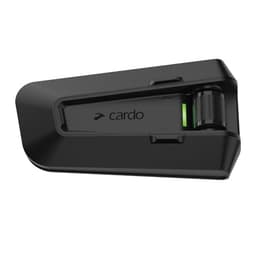
The unit reviewed here
Cardo Packtalk Pro
The top of Cardo's range, and the only unit here with crash detection. Cardo publishes 45 mm JBL speakers against the Edge's 40 mm, plus auto on/off — on the same 2nd Generation DMC network, the same 1.6 km unit-to-unit range, the same 13 hours and the same IP67 rating as the Edge. Buy it for the sensor and the bigger drivers, not for a better network.
See the full Cardo range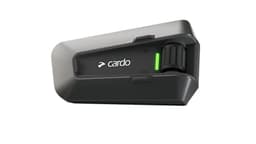
The cheaper unit on the same network
Cardo Packtalk Edge
The intercom most serious riders point to: Cardo's second-gen Dynamic Mesh (DMC) self-heals as riders drop in and out, JBL speakers sound excellent, and the magnetic Air Mount is the best in the class. The premium pick for group touring.
Compare the Edge and the Neo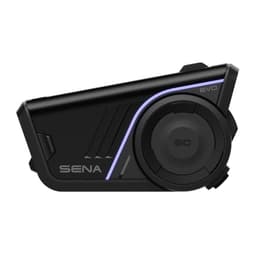
If your group rides Sena
Sena 60S EVO
Sena's current top tier, and the first of its units tuned by Bose rather than Harman Kardon. Mesh Intercom 3.0 plus the cellular Wave intercom, IPX7 waterproofing and the longest talk time Sena publishes anywhere in the range. It is also the most expensive way to join the same mesh network a 50S joins.
Read the flagship head-to-headPrice as of November 12, 2026. #ad How we’re funded
Availability, and why we checked
We check stock live before featuring any product on a new page, because a recommendation you cannot act on is not a recommendation. On 5 November 2026 the Packtalk Pro returned “In Stock” and the Packtalk Edge returned “In Stock”, so both of the units this review puts in front of you are purchasable in depth today. Prices move constantly and this site never prints one in prose — the buy buttons above carry the live figure with the date it was read, which is the only honest way to show a price on a page that will still be here next year.
One last piece of context on where the Pro sits. Our Cardo rankingcovers the whole range and the two places Cardo’s own pages disagree with each other; the main intercom ranking is the page to start on if you have not decided on a brand at all; and the group-riding page is the one that matters if the reason you want an intercom is other riders rather than a sensor.
Frequently asked questions
Is the Cardo Packtalk Pro worth the extra money over the Packtalk Edge?
Only if you want crash detection or the larger speakers, and you should know what each of those actually is before you decide. Cardo's own Edge-versus-Pro comparison table publishes identical figures for both units on every line that describes the network or the hardware platform: 2nd Generation DMC, 1.6 km unit-to-unit range, 8 km group range, 13-hour battery, charge while riding, IP67, Bluetooth 5.2, voice control, over-the-air updates, the Cardo Connect app, the magnetic Air Mount and a 3-year warranty. The Pro's differences, per that same table, are 45 mm JBL speakers against the Edge's 40 mm, auto on/off, and crash detection. The Pro also loses one thing: the table lists it as NOT Edgephones compatible, where the Edge is.
How does Cardo crash detection work, and what does it need?
Cardo publishes the architecture rather than leaving it vague, and the conditions matter more than the feature. Cardo describes a three-part system in which the Cardo Connect app on your paired phone processes the sensor data against impact thresholds; when an impact is detected that Cardo says 'meets the threshold for medical attention', the system automatically sends an emergency alert with your current GPS location to a designated contact, without you doing anything. The published requirements are the important part: Cardo states the feature 'requires an active Cardo Connect app connection and a paired smartphone with GPS enabled to function'. So no phone, no app running, no GPS, or no data connection means no alert.
Is Cardo crash detection available everywhere?
No, and Cardo says so without us having to infer it. Cardo's own page states that 'Crash Detection was available in selected countries at launch' and points readers to a separate crash-detection information page for the current region list — a list that is not printed on the comparison page we read. Cardo's FAQ on the same page also notes that availability 'may change with firmware updates'. We are not going to tell you whether your country or your riding area is covered, because the only source that can answer that is Cardo's own current region list. Check it before you pay the Pro premium for this feature specifically.
How many riders can the Packtalk Pro connect?
Thirty-one in a DMC group, and Cardo's own comparison page is wrong about it. The Max riders row in that table reads 15 for both the Pro and the Edge, while the body text on the same page says each unit 'connects to groups of up to 31 riders' and the FAQ repeats 31. The 15 is the pre-Mesh-Boost figure: Cardo announced Mesh Boost on 17 August 2026, raising DMC groups from 15 to 'Up to 31 riders in a true DMC group', delivered as an over-the-air software update through the Cardo Connect app for supported 2nd Generation DMC devices including the Packtalk Pro, Edge and Neo. The Edge's own firmware release notes carry the same change. So 31 is the current figure, it arrived by firmware, and it is not a reason to buy the Pro — the Edge and the Neo got it too.
Does the Packtalk Pro have better sound than the Edge?
It has bigger drivers, which is a different claim. Cardo publishes 45 mm JBL speakers for the Pro against 40 mm for the Edge, and that is the whole published difference — there is no frequency response, sensitivity or output figure for either unit, from Cardo or from anyone else. A larger driver generally moves more air and has an easier time at low frequencies, which in a helmet at highway speed is the range wind noise destroys first, so the physics is on the Pro's side. But nobody publishes a measurement, so treat 45 mm as a bigger number rather than a quantified improvement. If sound quality is the thing you care about most, the cheapest real upgrade is well-fitted earplugs with a published SNR, not bigger speakers.
Does the Packtalk Pro need a subscription?
Cardo publishes no subscription for the Packtalk Pro's intercom, app or firmware updates, and Cardo has in fact moved in the opposite direction on its range — its own Packtalk Custom release notes record Cardo unlocking the previously paid Platinum Package on that unit with the words 'no subscription needed'. What Cardo does publish for the Pro's crash detection is an ongoing dependency rather than a fee: an active app connection, a paired phone with GPS, and cloud data coverage. That is not a subscription, but it is a condition that has to keep being true for the feature to work.
Is the Packtalk Pro waterproof?
Cardo publishes IP67 for the Pro — the same rating it publishes for the Edge, the Neo and the Packtalk-S. IP67 means dust-tight plus protection against temporary immersion, which is a real rating rather than the word 'waterproof' on its own. It is worth noting how far that is from universal inside Cardo's own range: for the Freecom and Spirit families Cardo states that 'All Cardo units are waterproof' and publishes no IP number at all. When a maker gives you a code instead of an adjective, the code is the thing to read.
Should I buy the Packtalk Pro or a Sena 60S EVO?
They are the two current flagships and they sit on different mesh networks, which is the decision rather than the spec sheet. The short version: mesh is only useful with riders on compatible units, so the single biggest factor is what the people you actually ride with already own — Cardo DMC and Sena Mesh do not form one group. We have a dedicated head-to-head for this, built on both makers' published figures, and it goes through the rider counts, the range claims, the controls and the warranty terms side by side rather than summarizing them here.
Sources
- Cardo — PACKTALK EDGE vs PACKTALK PRO: Which to Buy? — Cardo's own full spec comparison table, re-read on this date, row by row. IDENTICAL on both units: Communication "2nd Generation DMC"; Unit-to-unit range "1.6km (1 mile)"; Group range "8km (5 miles)"; Mount type "Air Mount"; Battery life "13 hours"; Charge while riding "Yes"; Waterproofing "IP67"; Bluetooth version "5.2"; Voice control "Yes"; OTA firmware updates "Yes"; Cardo Connect app "Yes"; Warranty "3 years". DIFFERENT: Speakers "45mm JBL" (PRO) against "40mm JBL" (EDGE); Crash detection "Yes" against "No"; Auto On/Off "Yes" against "No"; Edgephones compatible "No" (PRO) against "Yes" (EDGE). THE PAGE CONTRADICTS ITSELF ON RIDER COUNT: the Max riders row reads "15" for BOTH units, while the body text on the same page says each unit "connects to groups of up to 31 riders" and the FAQ repeats 31 — the row is the pre-Mesh-Boost figure left in place after Cardo's own 17 August 2026 Mesh Boost announcement raised DMC groups to 31 by firmware. CRASH DETECTION, as Cardo publishes it on this page: it "uses a three-part architecture" in which "the Cardo Connect app on the rider's paired phone processes the sensor data against impact thresholds"; an alert triggers when "an impact is detected that meets the threshold for medical attention"; the system "automatically sends an emergency alert to a designated contact with the rider's current GPS location" and "The alert is sent without the rider needing to take any action"; "The feature requires an active Cardo Connect app connection and a paired smartphone with GPS enabled to function"; "Crash Detection was available in selected countries at launch" with the current region list NOT on this page; and the FAQ notes availability "may change with firmware updates". The page also states the EDGE "does not have the sensor array or cloud integration required for Crash Detection". Cardo prints single-unit prices of $499.95 (PRO) and $439.95 (EDGE) on this page; this site does not quote them in prose because prices come only from the live price layer (accessed November 5, 2026)
- Cardo — PACKTALK PRO — Cardo's published PACKTALK PRO specs: 2nd Generation DMC, "Connects Up to 31 Riders", range of up to 1.6 km / 1 mi, 45 mm JBL speakers, IP67 waterproof, patented magnetic Air Mount, 3-year warranty, and crash detection that Cardo states requires the unit, a phone and cloud data coverage and covers on-road/tarmac scenarios in selected regions only (accessed August 31, 2026)
- Cardo — PACKTALK EDGE — Cardo's published PACKTALK EDGE specs: 2nd Generation Dynamic Mesh, "Connect up to 31 riders", range of up to 1.6 km / 1 mi, 40 mm Sound by JBL speakers, IP67, Bluetooth 5.2, patented magnetic Air Mount, 2 hours of talk time after 20 minutes of charge, 3-year warranty (accessed August 31, 2026)
- Cardo — Mesh Boost: More Riders. More Adventures. — Cardo's own Mesh Boost announcement, published 17 August 2026: DMC groups previously supported up to 15 riders and now support "Up to 31 riders in a true DMC group", delivered as an over-the-air software update through the Cardo Connect app for "supported 2nd generation DMC devices, including PACKTALK PRO, EDGE and NEO" — firmware, not new hardware (accessed August 31, 2026)
- Cardo — Packtalk Edge release notes — Cardo's own Packtalk Edge firmware release notes, version 5.4: "We've extended DMC group size to 31 riders" and "Mesh Boost groups can include legacy DMC units (Packtalk Bold/Slim/Black) with some limitations" (accessed August 31, 2026)
- Cardo — Packtalk Neo vs. Edge: What's the Difference? — Cardo's own Neo-versus-Edge article: identical 2nd Generation DMC, "Unit-to-unit range reaches up to 1.6km, and the group range extends to 8km", 40 mm JBL speakers "tuned identically", "13 hours of talk time per charge" and "up to 10 days on standby" for both; the differences are the Air Mount versus the clickable mount, that "The Neo does not support charge-while-riding", and a 3-year versus 2-year warranty (accessed August 31, 2026)
Keep reading
Packtalk Pro vs Sena 60S EVO
The two current flagships head to head, on each maker's own published mesh generation, rider count and range figures.
Compare the flagshipsCardo intercoms ranked
Every Cardo unit we track, from the Spirit up, with the tier differences Cardo publishes and the two places its own pages disagree.
See the Cardo rangePacktalk Edge vs Neo
One tier below this review: the mount, the charge-while-riding difference and the warranty gap between Cardo's two mid-flagships.
Read the comparisonMesh vs Bluetooth intercoms
What DMC actually buys you over a Bluetooth chain, and the cross-brand limitation that decides most group purchases.
Read the explainerBest motorcycle intercoms
The main ranking across every budget, with the top pick's live price and the reason the flagship is not it for most riders.
See the rankingHow to install a motorcycle intercom
Where the speakers and microphone go, and the never-cut-the-EPS rule that protects the helmet you are fitting it to.
Read the install guide