Apex & Armor

Best Motorcycle Boots Under $200

Of the 17 boots we track, exactly one under this page's line publishes any certification at all. That is not a gap in our research — it is the finding, and it changes how you shop the band.

By Stephen V.Last updated How we research

Helmets have a legal floor. Boots do not. There is no US federal standard for motorcycle footwear, no DOT equivalent, and nothing stopping a company selling a leather boot with a motorcycle name on it and no protective structure inside. The only cross-brand measure that exists is the European EN 13634 standard — and it is voluntary.

That makes this price band unusually easy to describe. We track the published certification of 17 boots. Six of the 17 publish any certification claim, five name EN 13634, and exactly one publishes the four performance levels the standard actually awards. Of the boots that sit under this page’s line, the number publishing anything at all is one: the IRON JIA’S riding shoe, whose listing states “EN 13634:2017 Rated 1-2-2-1”. Every certified Alpinestars boot we track — and all four of them publish the standard — sits above this band.

So the honest version of “best motorcycle boots under $200” is: one boot that publishes a rating, and five that have to be judged on the four things you can verify without a certificate — how much of the ankle and shin is covered, whether there is any structure behind that leather, what the sole is made of, and whether there is a shift pad where the gear lever lands. That is what the ranking below does, in that order. We own none of this footwear and have worn none of it; every spec comes from the maker or the listing on a dated visit, and where a figure is not published the table says so rather than guessing.

How this is funded: we earn a commission if you buy through our links, at no extra cost to you. It never changes which gear we recommend, and we’ll tell you plainly when to skip a pick. Full disclosure.

Quick picks

Ranked on certification, spec and buyer fit. Select a row to jump to the full write-up. We haven’t crash-tested this gear — here is exactly what we do instead.

#GearBest forPrice
1
IRON JIA'S CE-Certified Riding Shoes

IRON JIA'S CE-Certified Riding Shoes

EN 13634:2017 rated 1-2-2-1 (per listing)

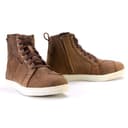
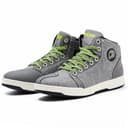
The budget sneaker-style riding shoe, and — read the listing — the only boot in this registry that publishes the full four-digit EN 13634:2017 code rather than just the standard. It states 1-2-2-1: short shaft, the higher level on abrasion and impact cut, the lower level on transverse rigidity. Nobody premium here publishes that much.

The only certified pick in the band
$89.99 · View on Amazon

Price as of November 12, 2026. #ad How we’re funded

2
Harley-Davidson Gavern Waterproof

Harley-Davidson Gavern Waterproof

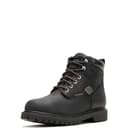
A waterproof leather riding boot in a casual cut — the practical choice for cruiser riders who commute through weather and don't want to change shoes at the office.

Best waterproof leather
$149.95 · View on Amazon

Price as of November 12, 2026. #ad How we’re funded

3
O'Neal Rider Boots

O'Neal Rider Boots

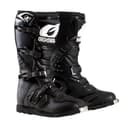
A tall MX-style boot at a genuinely low price: shin plate, buckles and a reinforced structure for riders who want maximum coverage for minimum money. Off-road-oriented, but the coverage is real.

Most coverage per dollar
$134.99 · View on Amazon

$149.9910% off

Price as of November 12, 2026. #ad How we’re funded

4
Milwaukee Leather MBM9063 Engineer Boot

Milwaukee Leather MBM9063 Engineer Boot

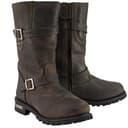
The classic distressed-brown engineer boot: tall shaft, buckle strap, oil-resistant sole. It's the look most cruiser riders actually want, in real leather rather than a costume version.

Best classic engineer boot
$179.99 · View on Amazon

Price as of November 12, 2026. #ad How we’re funded

5
Milwaukee Leather Classic Harness Boot

Milwaukee Leather Classic Harness Boot

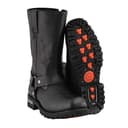
The harness boot — the one with the ring and straps at the ankle — done in real leather at a fair price. Style-first footwear that at least covers the ankle properly.

Best harness style
$159.99 · View on Amazon

Price as of November 12, 2026. #ad How we’re funded

6
Milwaukee Leather MBM9113 Riding Shoe

Milwaukee Leather MBM9113 Riding Shoe

A waterproof leather riding shoe with reinforced ankle support for under $100 — the budget answer for riders who want more than sneakers but won't wear a tall boot.

Budget pick — waterproof riding shoe
$96.99 · View on Amazon

Price as of November 12, 2026. #ad How we’re funded

All 6 priced picks are under $200 today. Checked against live retailer prices as of November 12, 2026. Prices move daily — the figure on each button is the one that counts, and the title is the guide.

The picks in full

#1The only certified pick in the bandEN 13634:2017 rated 1-2-2-1 (per listing)

IRON JIA'S CE-Certified Riding Shoes

The budget sneaker-style riding shoe, and — read the listing — the only boot in this registry that publishes the full four-digit EN 13634:2017 code rather than just the standard. It states 1-2-2-1: short shaft, the higher level on abrasion and impact cut, the lower level on transverse rigidity. Nobody premium here publishes that much.

Strengths

  • Publishes EN 13634:2017 rated 1-2-2-1 on the listing — the standard AND the levels
  • Unisex sizing, which is one of the few routes to a small-footed riding shoe
  • Ankle coverage and a reinforced shift pad over a sneaker sole, at well under $100

Trade-offs

  • The four-digit claim comes from the listing, not from a maker's technical page
  • The last digit is a 1 — the lower transverse-rigidity level, i.e. a softer sole
  • Synthetic construction — it will not last like leather
Safety standardEN 13634:2017 rated 1-2-2-1 (per listing)
ConstructionSynthetic upper with reinforced ankle and shift pad
Key featureEN 13634:2017 rated 1-2-2-1
Fit / sizingUnisex sizing; runs slightly narrow
Best forA first riding shoe, or a second pair to leave at work

Specs and certification read from the manufacturer and retailer listing, on October 15, 2026. “Check current listing” means the maker doesn’t publish that figure — we won’t guess it.

#2Best waterproof leather

Harley-Davidson Gavern Waterproof

A waterproof leather riding boot in a casual cut — the practical choice for cruiser riders who commute through weather and don't want to change shoes at the office.

Strengths

  • Waterproof leather construction for wet commutes
  • Casual silhouette that works off the bike
  • Full-grain leather rather than a coated synthetic

Trade-offs

  • Harley-Davidson doesn't publish a CE certification for this boot
  • Casual cut means less ankle structure than a dedicated riding boot
Safety standardCheck current listing
ConstructionWaterproof full-grain leather
Key featureWaterproof leather, casual cut
Fit / sizingRuns true; lace closure
Best forCruiser commuters who need a waterproof boot that passes as normal footwear

Specs and certification read from the manufacturer and retailer listing, on August 11, 2026. “Check current listing” means the maker doesn’t publish that figure — we won’t guess it.

#3Most coverage per dollar

O'Neal Rider Boots

A tall MX-style boot at a genuinely low price: shin plate, buckles and a reinforced structure for riders who want maximum coverage for minimum money. Off-road-oriented, but the coverage is real.

Strengths

  • Tall shaft with a shin plate and buckle closure
  • Reinforced heel, toe and ankle
  • Very low price for a tall boot

Trade-offs

  • Stiff and MX-styled — not a walkable street boot
  • Break-in period before they're comfortable
Safety standardCheck current listing
ConstructionSynthetic upper, shin plate
Key featureTall MX-style, shin plate
Fit / sizingRuns true; stiff when new
Best forBudget riders who want tall-boot coverage cheaply

Specs and certification read from the manufacturer and retailer listing, on July 21, 2026. “Check current listing” means the maker doesn’t publish that figure — we won’t guess it.

#4Best classic engineer boot

Milwaukee Leather MBM9063 Engineer Boot

The classic distressed-brown engineer boot: tall shaft, buckle strap, oil-resistant sole. It's the look most cruiser riders actually want, in real leather rather than a costume version.

Strengths

  • Full leather upper with a tall shaft covering the ankle and lower shin
  • Oil-resistant sole with real grip at a stop
  • Pull-on design with no laces to catch on a peg

Trade-offs

  • No published CE certification or ankle-armor structure
  • Heavy, and the tall shaft is warm in summer
Safety standardCheck current listing
ConstructionDistressed leather upper
Key featureTall leather engineer boot
Fit / sizingRuns true; pull-on with buckle
Best forCruiser riders who want the traditional engineer silhouette

Specs and certification read from the manufacturer and retailer listing, on August 11, 2026. “Check current listing” means the maker doesn’t publish that figure — we won’t guess it.

#5Best harness style

Milwaukee Leather Classic Harness Boot

The harness boot — the one with the ring and straps at the ankle — done in real leather at a fair price. Style-first footwear that at least covers the ankle properly.

Strengths

  • Real leather with full ankle coverage
  • Classic harness hardware and a durable outsole
  • Pull-on, so nothing to lace or catch

Trade-offs

  • No CE certification or dedicated impact structure published
  • Harness rings can snag on footpegs and highway bars
Safety standardCheck current listing
ConstructionLeather upper, harness hardware
Key featureLeather harness boot
Fit / sizingRuns true; pull-on
Best forRiders who want the harness-boot look with genuine leather coverage

Specs and certification read from the manufacturer and retailer listing, on August 11, 2026. “Check current listing” means the maker doesn’t publish that figure — we won’t guess it.

#6Budget pick — waterproof riding shoe

Milwaukee Leather MBM9113 Riding Shoe

A waterproof leather riding shoe with reinforced ankle support for under $100 — the budget answer for riders who want more than sneakers but won't wear a tall boot.

Strengths

  • Waterproof leather at a genuine budget price
  • Reinforced ankle support rather than a plain casual shoe
  • Low cut that's easy to walk and drive in

Trade-offs

  • No CE certification published
  • Low cut gives the least ankle coverage of anything on this page
Safety standardCheck current listing
ConstructionWaterproof leather upper
Key featureWaterproof leather riding shoe
Fit / sizingRuns true; low cut
Best forBudget riders stepping up from sneakers who want waterproofing too

Specs and certification read from the manufacturer and retailer listing, on August 11, 2026. “Check current listing” means the maker doesn’t publish that figure — we won’t guess it.

What EN 13634 measures, and why one rating beat five brand names

EN 13634 is the European standard for motorcycle footwear, and what makes it useful is that it does not award a single pass. It awards four numbers, and Dainese — a maker that certifies to it and publishes a plain explainer — sets out what they mean: in order, the height of the upper, the impact abrasion level, the impact cut level, and the transverse rigidity level. Each test is evaluated on its own, so one boot can hold Level 2 on abrasion and Level 1 on rigidity. Dainese publishes the thresholds too: on impact abrasion a sample must last at least five seconds for Level 1 and twelve for Level 2; on impact cut the blade must penetrate no more than 25 mm for Level 1 and no more than 15 mm for Level 2.

Read the IRON JIA’S claim against that and it is a genuinely informative string. “1-2-2-1” says: short shaft, the higher level on abrasion, the higher level on cut, the lower level on transverse rigidity. In plain terms — it resists dragging and slicing well, and its sole is comparatively soft, so it will not do much to stop the foot being crushed sideways. That is more than any premium boot in our registry tells you. Alpinestars publishes “CE EN13634:2017” on the SMX-1 R V2 and the Faster-3 Rideknit and stops there; it does not publish the four levels for either.

The caveat is equally important and we put it in the boot’s own trade-off list: the four-digit code comes from the retail listing, not from a technical page on a maker’s own site naming a test house. A marketplace listing is a weaker provenance than a manufacturer’s specification sheet, and we grade it that way. It is still the only performance data available in this band, and a stated rating you can check the shape of beats five boots that publish nothing.

How we ranked the five boots that publish no rating

1. Coverage: how far up does it go?

This is the criterion riders systematically under-weight, because it is the least glamorous. Ankle injuries are the characteristic motorcycle foot injury, and the single best predictor of whether a boot does anything about them is whether it covers the ankle at all. The O’Neal Rider is a tall MX-style boot with a shin plate and buckle closure, and on pure coverage per dollar nothing else here is close. The two Milwaukee tall boots cover the ankle and lower shin in real leather. The Gavern is a casual cut, so it covers the ankle but with less structure. The Milwaukee riding shoe is a low cut and gives the least coverage of anything on this page — which is exactly why it is the budget pick and not the overall one.

2. Structure: is there anything behind the leather?

Leather is an abrasion material, not an impact material. A riding boot adds a heel counter, an ankle cup or a reinforced panel behind the upper so that a crush load is spread instead of transmitted. None of the five uncertified boots here publishes an ankle-armor specification, and we will not infer one from a product photo — where a maker says nothing, the spec table says “Check current listing”. What can be read is reinforcement that the listing does state: the O’Neal names a reinforced heel, toe and ankle; the Milwaukee riding shoe names reinforced ankle support. That is a weaker claim than a certificate and a stronger one than silence.

3. Sole and shift pad

Two things happen at your feet on every ride: you put a foot down at a stop, and you work the gear lever with the top of the left boot. An oil-resistant sole with real grip handles the first — both Milwaukee tall boots publish one. A reinforced shift pad handles the second, and over a season it is the difference between a scuffed boot and a hole. The IRON JIA’S publishes a shift pad; the leather boots here rely on the thickness of the upper.

4. Whether you will actually wear it

A tall MX boot is stiff, warm and not pleasant to walk in, and a boot left in the garage protects nothing. That is the honest argument for the waterproof casual boot and the riding shoe on this page even though they cover less: for a commute with a walk at either end, the boot you keep on is worth more than the boot you skip. The same logic runs through our casual riding boots ranking, where walkability is the primary criterion rather than a concession.

Waterproofing claims in this band, and what they are worth

Three boots here make a waterproof claim, and none of them publishes a test method or a hydrostatic figure, because waterproofing is the one major gear specification with no standard behind it. There is no certifying body and no cross-brand number. What you can read is construction: the Gavern and the Milwaukee riding shoe are both described as waterproof leather rather than a coated synthetic, which is the more durable of the two routes. Treat the claim as “designed to keep water out” and not as a rating, expect to re-treat leather through its life, and carry overlays for sustained rain — the advice our waterproof boots ranking gives for every price band including the ones above this one.

What the money above this line buys

It buys the certificate. That is the short answer and it is unusually clean: step up and you reach the Alpinestars boots that publish CE EN 13634:2017, a TPU heel counter and ankle brace, a transverse protection frame in the sole, and accordion flex zones so the structure does not fight your ankle. Our beginner boots ranking covers the cheapest certified options in detail, and the Forma Adventure against the Alpinestars SMX-1 R V2 puts two of them head to head. If your ceiling is firmly below this page, our budget boots ranking works the tier underneath and includes two boots that were too thin on stock to feature here.

One closing note on sizing, because it costs more returns in boots than anything else: ride-specific footwear is cut over a different last than a street shoe, and several boots here are pull-on designs with no adjustment at all. Order your measured size, try them on with the socks you ride in, and check that you can work the gear lever and the rear brake before the boot has been outside. How motorcycle gear should fit covers the whole kit, boots included.
How to read our safety notes. We have not crash-tested any of this gear — nobody honestly can on a review budget. Every helmet and armor pick names the certification the maker publishes (DOT, ECE 22.06, SNELL, or a CE level), which we read from the listing on a dated visit. Certification is the floor, not a guarantee; fit and condition matter as much as the sticker. What the standards actually mean.

Frequently asked questions

Are motorcycle boots under $200 worth buying?

Yes, with your eyes open. Anything that covers the ankle, has a stiff sole and resists abrasion is a large improvement on sneakers, which is what most riders are actually comparing against. What you give up below $200 is almost all the certification: of the 17 boots we track, every boot that publishes a CE EN 13634 standard from a manufacturer page sits above this line. One boot in this band publishes a rating, and it does so on its retail listing rather than on a maker's technical page.

Is there a CE-certified motorcycle boot under $200?

One that we track: the IRON JIA'S riding shoe, whose listing publishes 'EN 13634:2017 Rated 1-2-2-1' — short shaft, the higher level on impact abrasion and impact cut, the lower level on transverse rigidity. It is the only boot in our registry that publishes the four performance levels at all, premium models included. The provenance is a marketplace listing rather than a maker's spec sheet, which is why we state the claim and its source together.

What do the four numbers on a motorcycle boot mean?

They are the EN 13634 performance levels, and Dainese publishes what they measure: in order, the height of the upper, the impact abrasion level, the impact cut level and the transverse rigidity level. Each is scored separately as Level 1 or Level 2, so a boot can be strong on abrasion and weak on crush resistance. The mark sits on the lower part of the tongue. Our EN 13634 guide works through each test.

Are motorcycle boots or riding shoes better for commuting?

For a commute with a walk at either end, a riding shoe you keep on beats a tall boot you leave at home — and that is a real safety argument, not a comfort one. A tall boot protects the shin and resists crush far better, so if your ride is longer or faster than a commute, take the coverage. Both routes are on this page: the tall boots cover more, the riding shoe and the casual waterproof boot are the ones you will walk in.

Why do the prices on this page change?

Because this site stores no prices. Every button shows a live, date-stamped retailer price that expires on its own rather than going stale, and the note under the quick-picks table re-checks the whole list against the $200 line each time the page is served. A pick near the line can cross it on a given day; when it does, the note says so and the button is still right.

Sources

  • Dainese — How does certification for motorcycle shoes and boots work? — A manufacturer's own explainer of the standard it certifies to. Dainese publishes: "Motorcycle footwear is certified according to European standard EN13634, which provides two levels of certification"; the symbol sits "on the lower part of the tongue" and "indicates the reference standard and the final level"; the four numbers read, in order, upper HEIGHT, impact ABRASION level, impact CUT level and TRANSVERSE RIGIDITY level, and "Each test is evaluated individually" so one boot can hold different levels across the four. The numeric thresholds Dainese publishes: impact abrasion "To achieve level 1 certification, the sample has to last at least 5 seconds; for level 2, 12 seconds"; impact cut "No more than 25 mm for level 1 certification, no more than 15 for level 2". It describes the abrasion rig as 60-grit sandpaper simulating asphalt, the cut test as a blade dropped at 2.8 m/s, and transverse rigidity as sole deformation measured under a press. Other manufacturer documents quote lower abrasion seconds because EN 13634 tests two zones of the boot separately — which is why this page attributes the figures to Dainese rather than asserting them as the standard's own numbers (accessed October 15, 2026)
  • Alpinestars — SMX-1 R V2 Boots (maker's product page) — Alpinestars' own certification statement, verbatim: "According to European statutory law the CE mark is a conformity requirement for the marketing of this product." and "The following standards apply: CE EN13634:2017." Published construction: "lightweight and abrasion-resistant microfiber upper" reinforced with strategically placed TPU protectors; "External, high modulus TPU heel counter, lateral ankle and shift pad"; microfiber instep and Achilles accordion flex zones; a rubber compound sole with an "integrated Alpinestars TPF (Transversal protection Frame)" against transverse loads; thermowelded flex grooves; a front Velcro closure over the instep with aramidic-fiber strap wires and a TPR puller; and a reverse zip entry. Sizes UK 4.5-13.5 / EU 38-50. Alpinestars publishes the STANDARD and not the four EN 13634 performance levels, and publishes no ventilation or perforation spec even though the US retail listing calls the boot "Vented" (accessed October 15, 2026)
  • Alpinestars — Faster-3 Rideknit Shoes (maker's product page) — Alpinestars' own certification statement for the riding shoe, verbatim: "According to European statutory law the CE mark is a conformity requirement for the marketing of this product." with "The following standards apply:" listing "CE EN13634:2017". Published construction: "Upper constructed from a superbly lightweight, durable and abrasion-resistance microfiber"; a breathable 3D mesh lining with anti-slip micro-suede at the heel; a TPR heel counter "to add side support and stability"; and a replaceable, anatomically shaped EVA footbed with a Lycra top. Closure is laces plus a hook-and-loop ankle strap. Sizes 6 to 14 in whole and half sizes. What Alpinestars does NOT publish for this model, and the reason the page says so: no ankle protector, no shift pad, no sole material and none of the four EN 13634 performance levels (accessed October 15, 2026)

Keep reading

More in Boots